Tag Archives: Harrisonburg

A good local association in a time of national peril

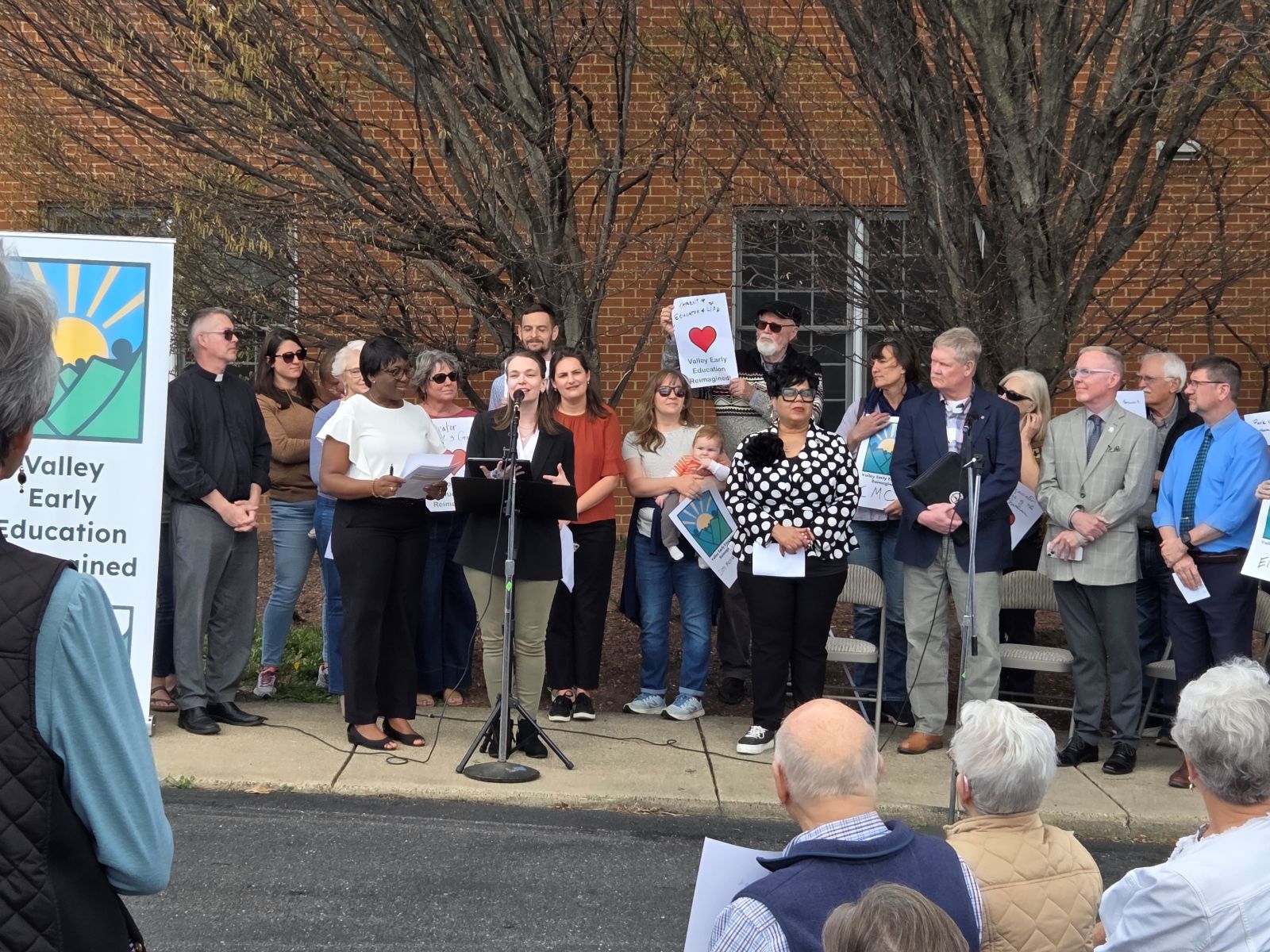
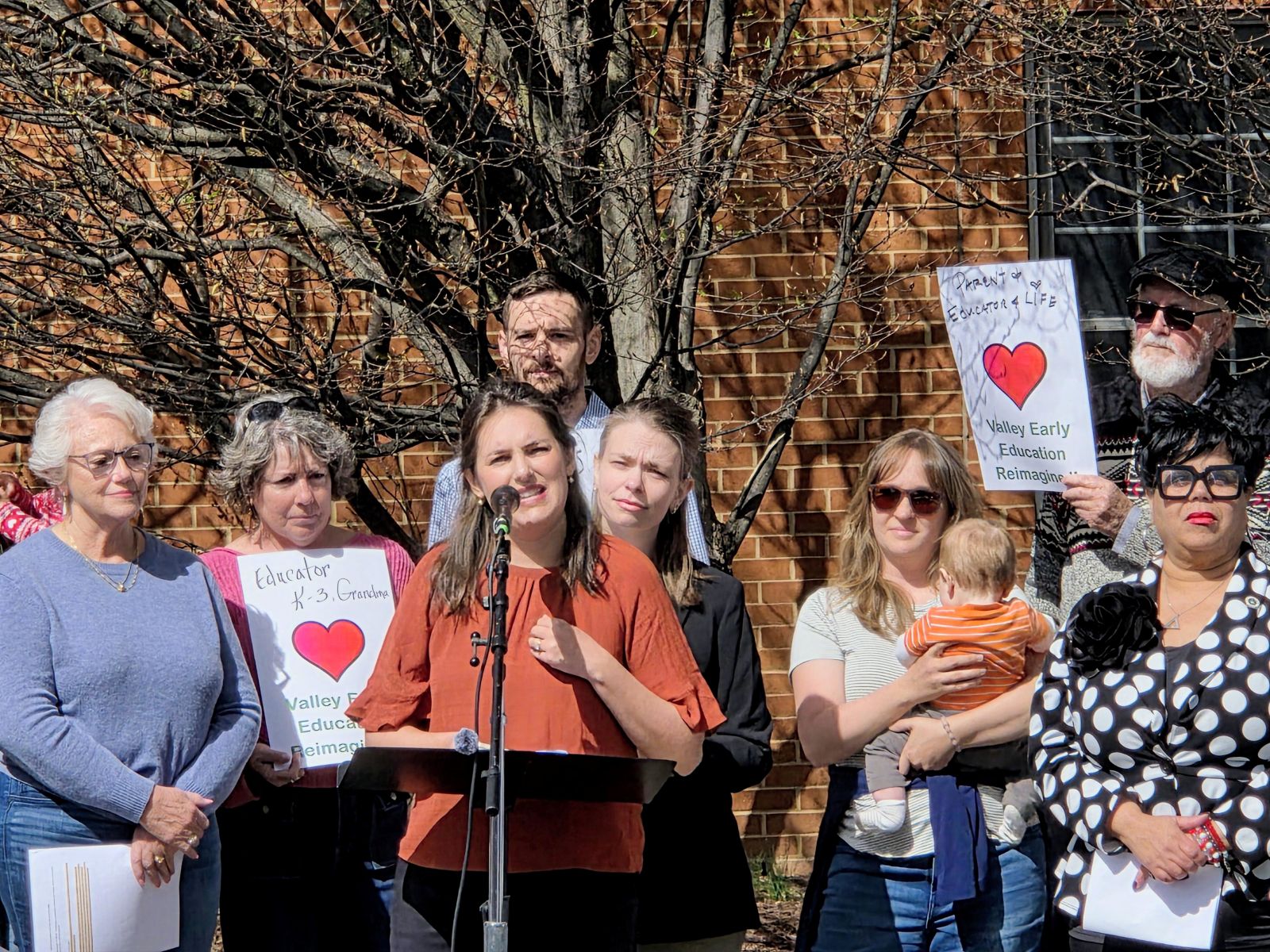
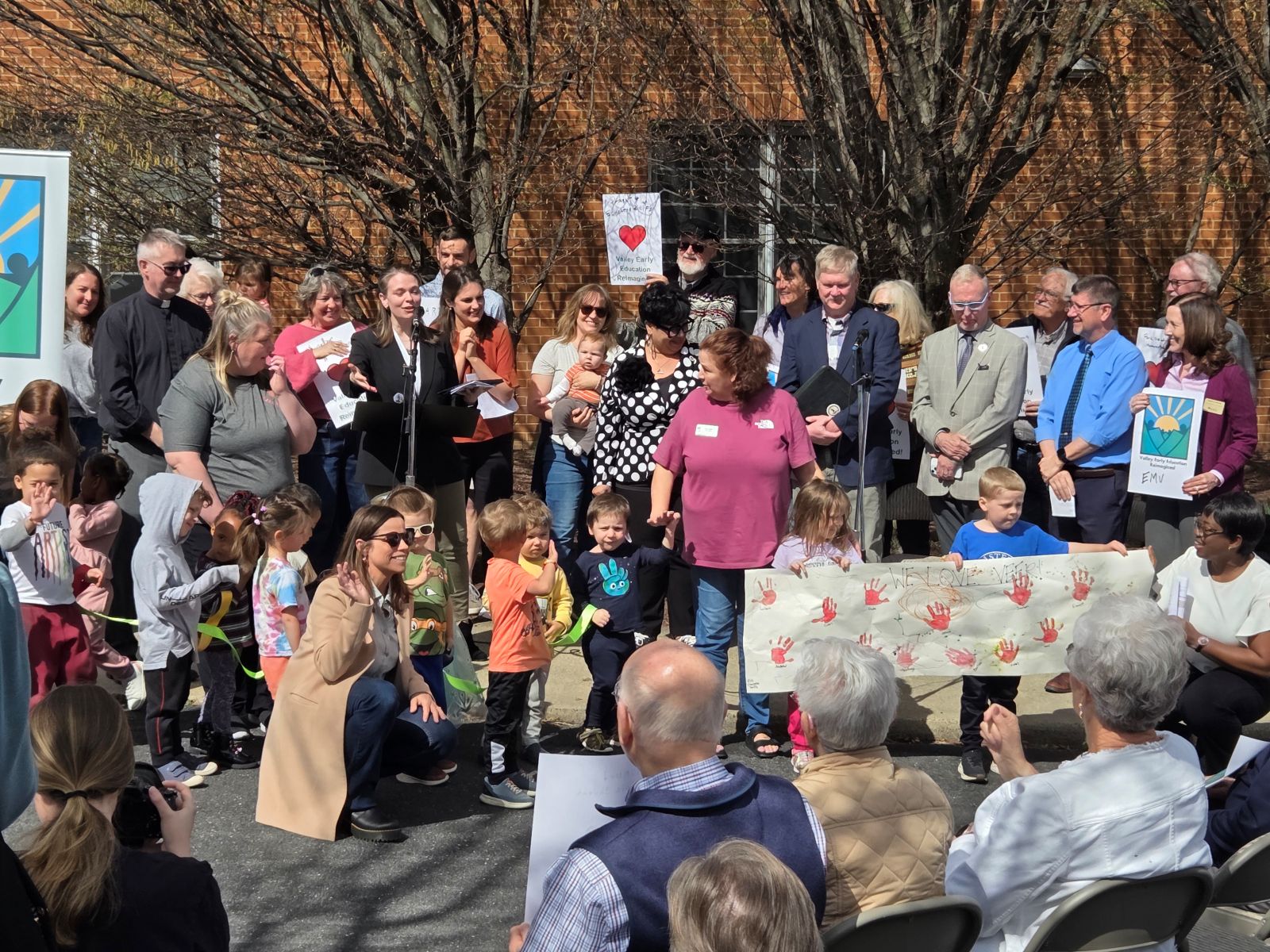
This week, I attended an energizing and hope-filled press conference held in a local congregation’s parking lot. About seventy community members gathered on a sun-drenched but cool Monday morning to hear about the progress of an innovative tri-party association. A new preschool that held the press conference emerged from families who want their children enrolled in a quality program while they work.

With families of preschoolers, the public school superintendent, and city and state politicians in attendance, the innovative preschool model shows how local entities can come together to improve the community.

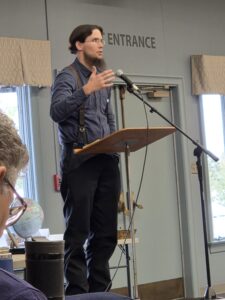
Valley Early Education Reimagined press conference, Harrisonburg Va., March 23, 2026. E. Yoder photo

There was energy in the press conference. A mother of a boy in the preschool program explained that she could continue teaching at a local high school because her son was well cared for. Another mother detailed her anxious choice between having her children in a good preschool or staying home to care for them.

With kids, educators, pastors, grandparents, and politicians, those who gathered created a sense of purpose and renewed hope for our community. We are in a time of national peril, about which few would disagree. But here in my backyard, less than a mile from where I live, is a new association bubbling up from below, showing what we can achieve together.

Launched by Valley Interfaith Action, of which I’m a part, Valley Early Education Reimagined (VEER) is a new model seeking employers and state officials to help fund preschool expenses.

VEER press conference, Harrisonburg, Va., March 23, 2026. E. Yoder photo

Alexis de Tocqueville, a French traveler and writer who came to the United States in 1831, described the unique way Americans create associations for their own betterment. Tocqueville’s description of associations unfolded before my eyes as speaker after speaker at the March 23, 2026, press conference explained how we in this community could work together for our common good.

The mood was positive and hopeful. Two men thanked me for a recent history lecture before the event began. But when the press conference started, I listened to every word. “Together,” a Church of the Brethren pastor declared, “We are pioneering a sustainable childcare model for Virginia.” And the mayor of Harrisonburg, Virginia, called us to work “together, together, together.” The mayor’s energy was the kind of civility and cooperation that James Madison described in Federalist #10, where factions in society come together, working from the bottom up, to create a better world for the participants.

This community movement, driven by diverse local people working together, offers hope that we can overcome divisions and build a stronger society.

VEER press conference, March 23, 2026, Harrisonburg, Va. E. Yoder photo

Happy Birthday, James Madison!

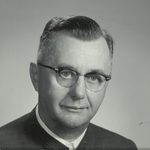
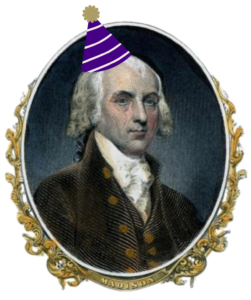
James Madison image courtesy of James Madison University, Harrisonburg, Va.

Happy 275th birthday, James Madison! At my job in Harrisonburg, Virginia, I’ve created a small historical exhibit to honor the fourth president, James Madison, from nearby Montpelier, Virginia.

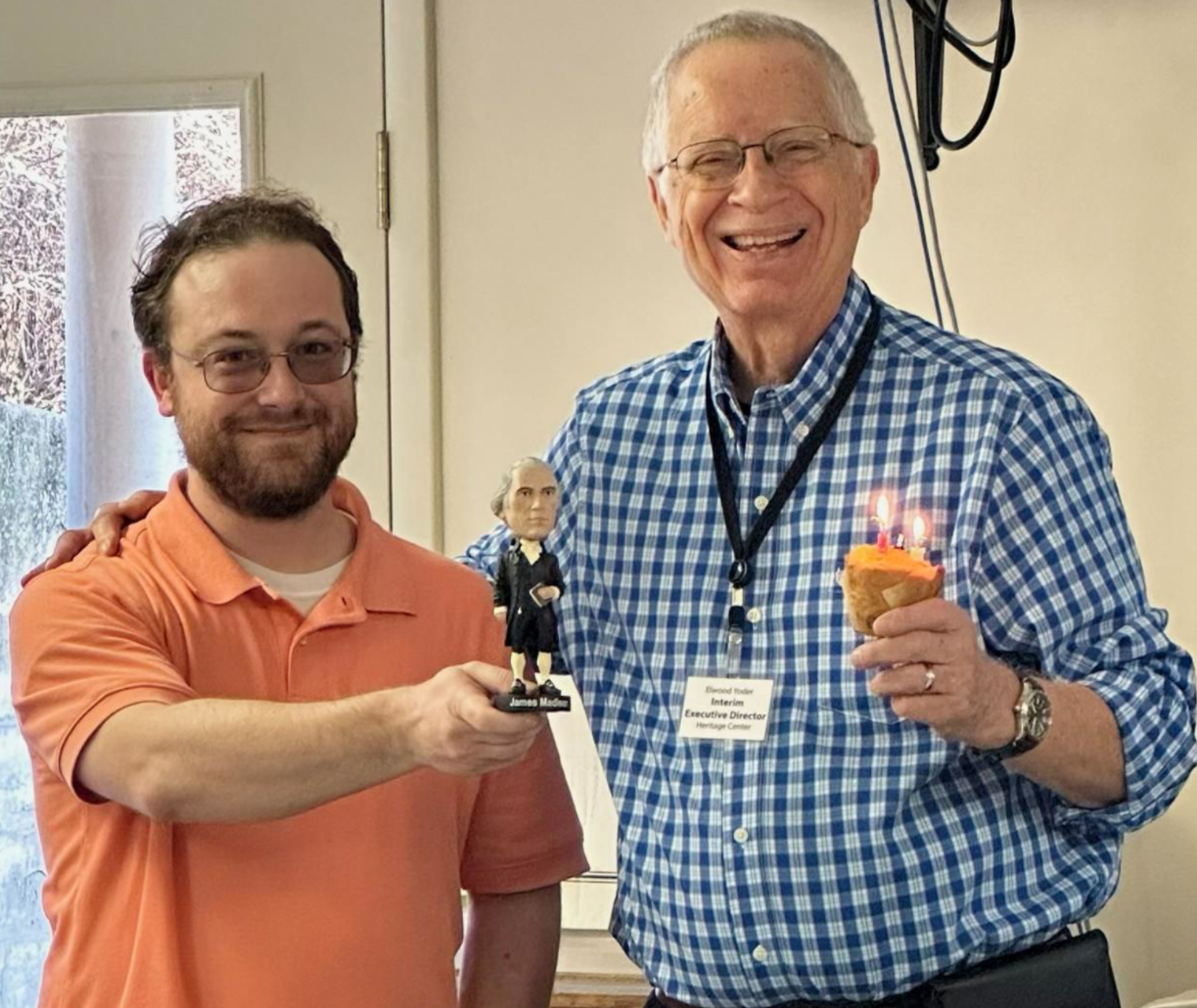
A few days ago, when James Madison University, a major university I can see from the Heritage Center where I work, celebrated James’s 275th birthday, we did the same. We brought in bagel bites, muffins, candles, and a Jimmy Madison bobblehead. About fifteen volunteer carpenters had come to work for the day, and at lunch, around tables, they humored me by singing “Happy Birthday” to James Madison.

In the earlier Julian calendar, Madison was born on March 6. In the Gregorian calendar, adopted in the United States when James was one, his birthday moved to March 16. Take your pick — JMU and the Brethren & Mennonite Heritage Center each had a party in Harrisonburg, Va., on March 6 (Julian), but March 16, 2026 (Gregorian), is Madison’s 275th birthday.

So here’s a tribute to the political philosopher who brought religious freedom to the United States. I’m a Mennonite, and for these 250 years of the United States, my people have been privileged to worship in freedom, even with minority religious beliefs. Madison’s First Amendment says it all: “Congress shall make no law respecting an establishment of religion, or prohibiting the free exercise thereof.”

Celebrating James Madison’s birthday, March 6, 2026
M. Garber photo

A Call for Sustainable Living and a Rebirth of Anabaptism

Sam Funkhouser, a member of the Old German Baptist Brethren, New Conference, challenged approximately 80 attendees at a November 15, 2025, stewardship seminar to live in radical nonconformity to a culture deeply at odds with the gospel message of Jesus. Most of those who attended the stewardship forum at Harrisonburg Mennonite Church were Mennonites, but not all. One woman who wasn’t Mennonite attended and confirmed how relevant this was for all followers of Jesus.

Funkhouser presented with the conviction of a modern-day prophet. But with a twinkle in his eye and a smile, he said, “You invited me to come and speak.” Most at this meeting live like kings, he declared, and “Our standard of living is predicated on masses of people living in poverty around the world.” Funkhouser, with an MDiv from Princeton Theological Seminary, used Scripture to warn against the dangers of wealth and read from a 1903 Brethren doctrinal book on nonconformity to tell the story of the rich man and Lazarus. Funkhouser concluded his call to sustainable living by reading Isaac Watts’ lyrics from an 1882 Old German Baptist Brethren hymnbook: “Come, let us search our ways and see, have they been just and right?”

Sam Funkhouser spoke at the seminar on Nov. 15, 2025, at Harrisonburg Mennonite Church. (photo by Elwood Yoder)

Steve Pardini, Virginia Mennonite Conference Interim Chair, spoke from a scientific perspective about sustainable economics in the twenty-first century. Pardini, with a PhD in physical chemistry and an MDiv, encouraged seminar participants to consider the environmental advantages of driving electric vehicles rather than gas-powered cars. Then he explained why blue whales matter in today’s world. Europeans, with deadly harpoons and fast whaling ships, hunted blue whales to near extinction by 1900 for their blubber, a source of lamp oil, machine lubricant, and perfumes. But they are a vital part of the ocean ecosystem, eating krill and producing excrement that feeds plankton, which all sea life depends on. Plankton removes CO2 from the atmosphere and releases O2, benefitting the biosphere.

Pardini explained that while indigenous groups sustainably hunted whales for centuries, a warped sense of dominion over the planet nearly led to the blue whale’s extinction. Pardini has just released Climate Change and the Healing of Creation. This excellent 217-page book outlines a readable scientific and theological foundation for creation care, available for purchase on Amazon.

Over the lunch hour, table discussion groups enjoyed a “stone soup” stew made with chopped vegetables participants brought with them. And in the spirit of renewed concern over world neighbors in need, over $2000 was raised for the work of Mennonite Central Committee.

While the long-term impact of the seminar remains to be seen, attendees departed with a clear awareness that, for Anabaptism to survive, sustainable economic living and choices that align with the gospel call of Jesus are essential.

Information Superhighway

The Information Superhighway has changed schools.  In the 1970s high schools had books, magazines, and traditional libraries.  Today students can access a world of resources on computers in their classrooms.  The Kennel Charles Church History desk (right), with Martyrs Mirror on the top shelf, hosts a state-of-the-art computer that brings information to the student in the history teacher’s classroom at Eastern Mennonite High School, Harrisonburg, Virginia.

March 2014 EMHS

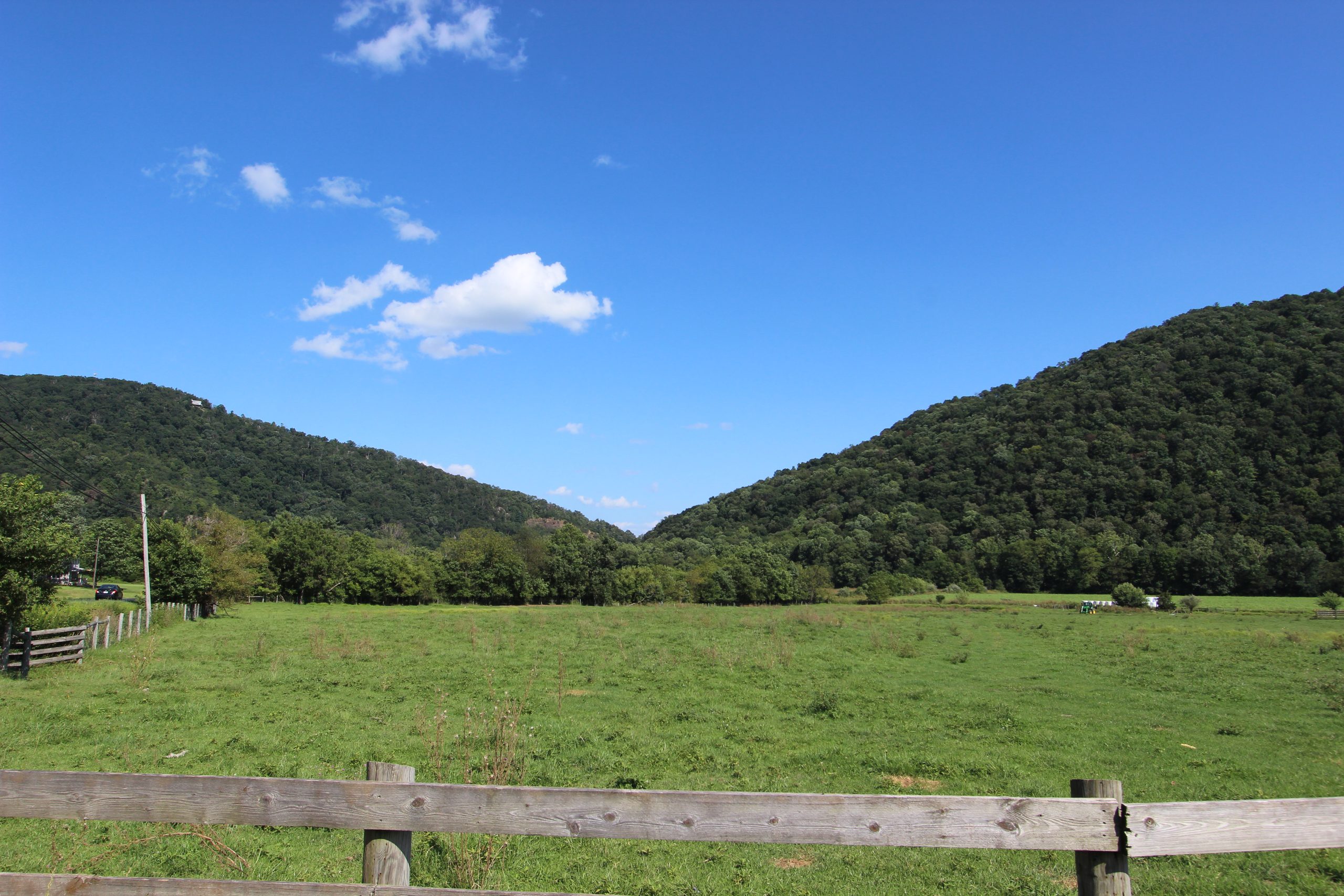
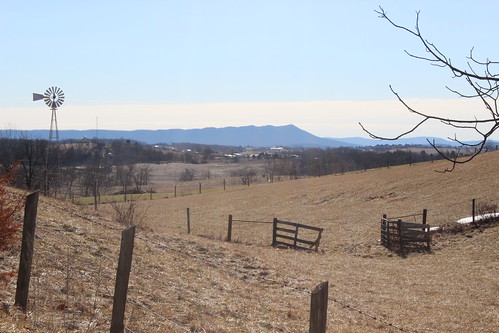
Massanutten Mountain from Greenmount and Sky Road intersection, Rockingham County, Virginia

On a trip from Singers Glen, Virginia, to Harrisonburg, Virginia, the historian spotted this grand view of the Massanutten Mountain. On his trips to Harrisonburg, musician Joseph Funk probably paused to relish in the ancient beauty of the distant mountain peak. Perhaps it was inspiration for his printing and musical work in the valley.

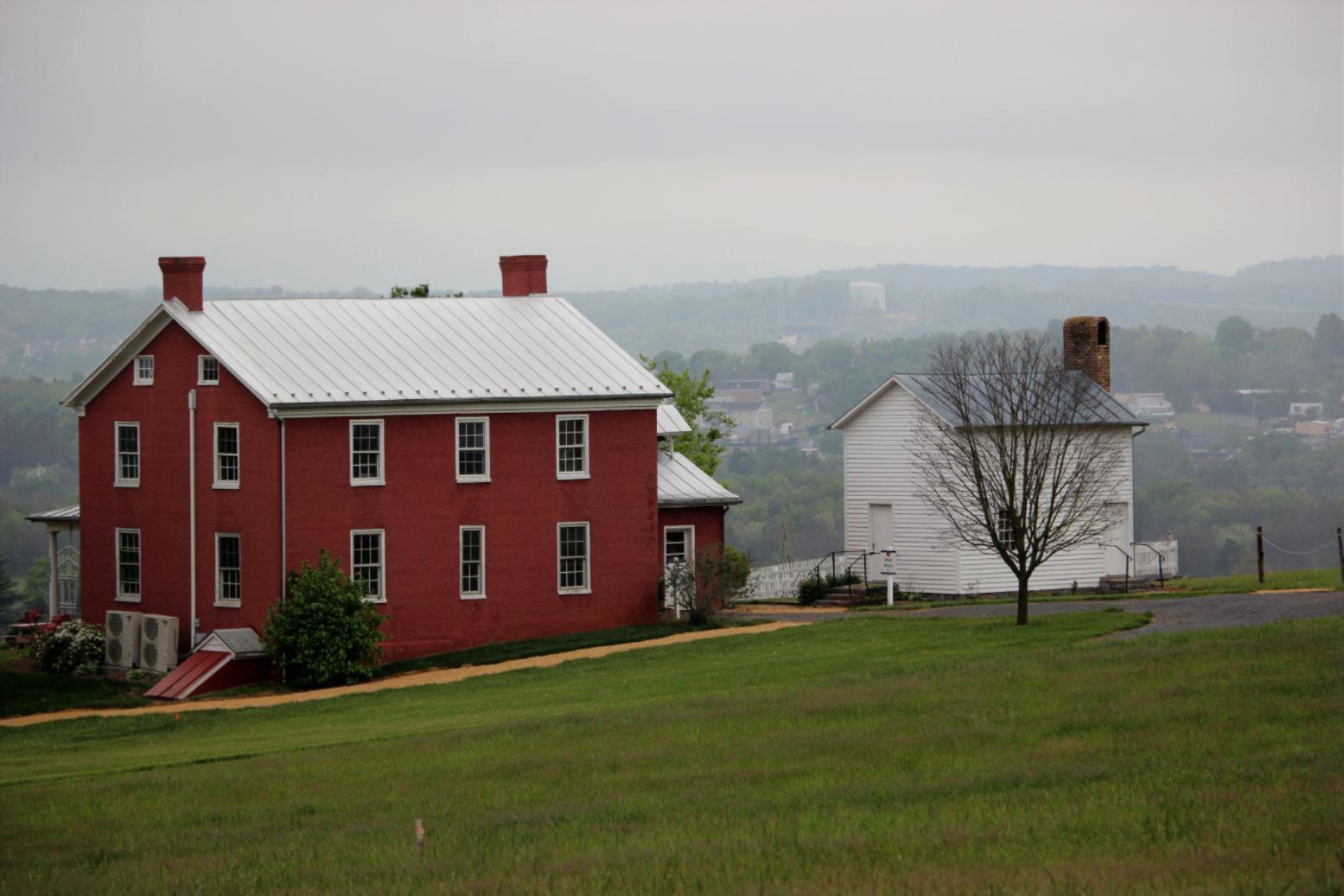
Burkholder-Myers house, CrossRoads Heritage Center, December 7, 2013

Christmas on a cold December evening at the historic 1854 Burkholder-Myers house in Harrisonburg, Virginia, with twenty-first century lights and a football field in the distance. Martin and Rebecca Burkholder would find it a challenge to recognize their own house.

Massanutten Mountain 2013

IMG_2104

Mennonite Bishop Lewis J. Heatwole wrote an article for the Daily News Record, Harrisonburg, Virginia, in 1921, in which he explained the meaning of the word Massanutten.  From his research he concluded that Massanutten is from two Indian words for “ground” and “potato,” which when put together mean “Potato Ground.”  Today the old peak still towers over the valley, easily seen from a jumbo jet descending on a Washington, D.C. airport from the south, and visible from about any point in the Shenandoah Valley.  The encroachments of civilization have not dimmed the spectacle and grandeur of a mountain that has provided a visual feast for ancient Indians and modern travelers.