Patterns of peace in a broken world

On Easter, a leader lit a peace lamp on the pulpit. Not a big deal, I guess, but I was six states away from where I usually worship, and her simple act of lighting a lamp for peace and praying for our divided world got me thinking.
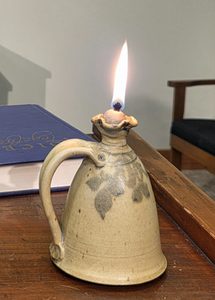
Despite stark political divisions in the United States and a war in the Middle East, we can still see patterns of peace in our lives if we look for them—the small peace lamp kept my attention and burned during the entire Easter service.

While driving away from the barn where our family gathered for an early morning Easter sunrise service, I stopped the van. The farm’s owners had placed a small cross in the yard, strategically positioned to catch the bright rays of the rising sun. It stunned me, so I stopped, with four grandsons buckled in behind me. I needed to move quickly to take the photo of the crude cross that reminded me of the peace that I hope for in our world today.
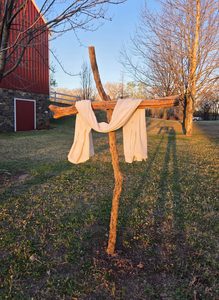
And the sunrise service had been ecumenical, welcoming people from several area congregations. Again, to notice the pattern of peace was heartening to me.

Back in Virginia, after 4.5 hours of sleep, I spoke to a group of about 30 men for an early Tuesday morning Bible study. Again, I noticed and thought about the reality that these men and I came from 8-10 different congregations. It helps to look for patterns of peace because the small things we notice help to cope with larger differences in the world.

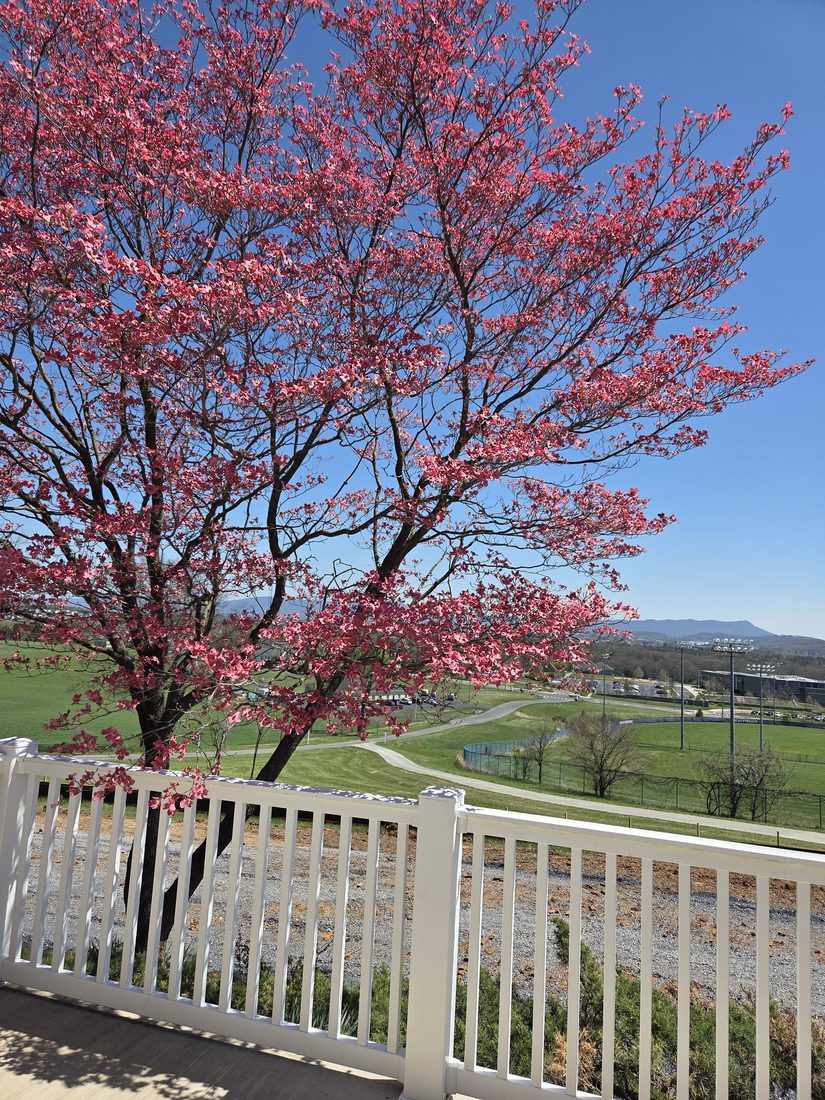
At work that first day back from Kansas, I ate lunch on the Welcome Center deck that faces toward the Massanutten Mountain. I’m always encouraged by the ancient mountain’s peak and its silent elegance, with the Blue Ridge beyond. Above the deck was a glorious pink dogwood, in full spring bloom, delivering beauty to my lunch break that was glorious, enchanting, and memorable.

It doesn’t always work for me, but when I can notice patterns of peace around me, in wholesome relationships, societal systems that still work, and natural wonders that amaze, my spirit fills with hope for peace in a broken world.
A good local association in a time of national peril

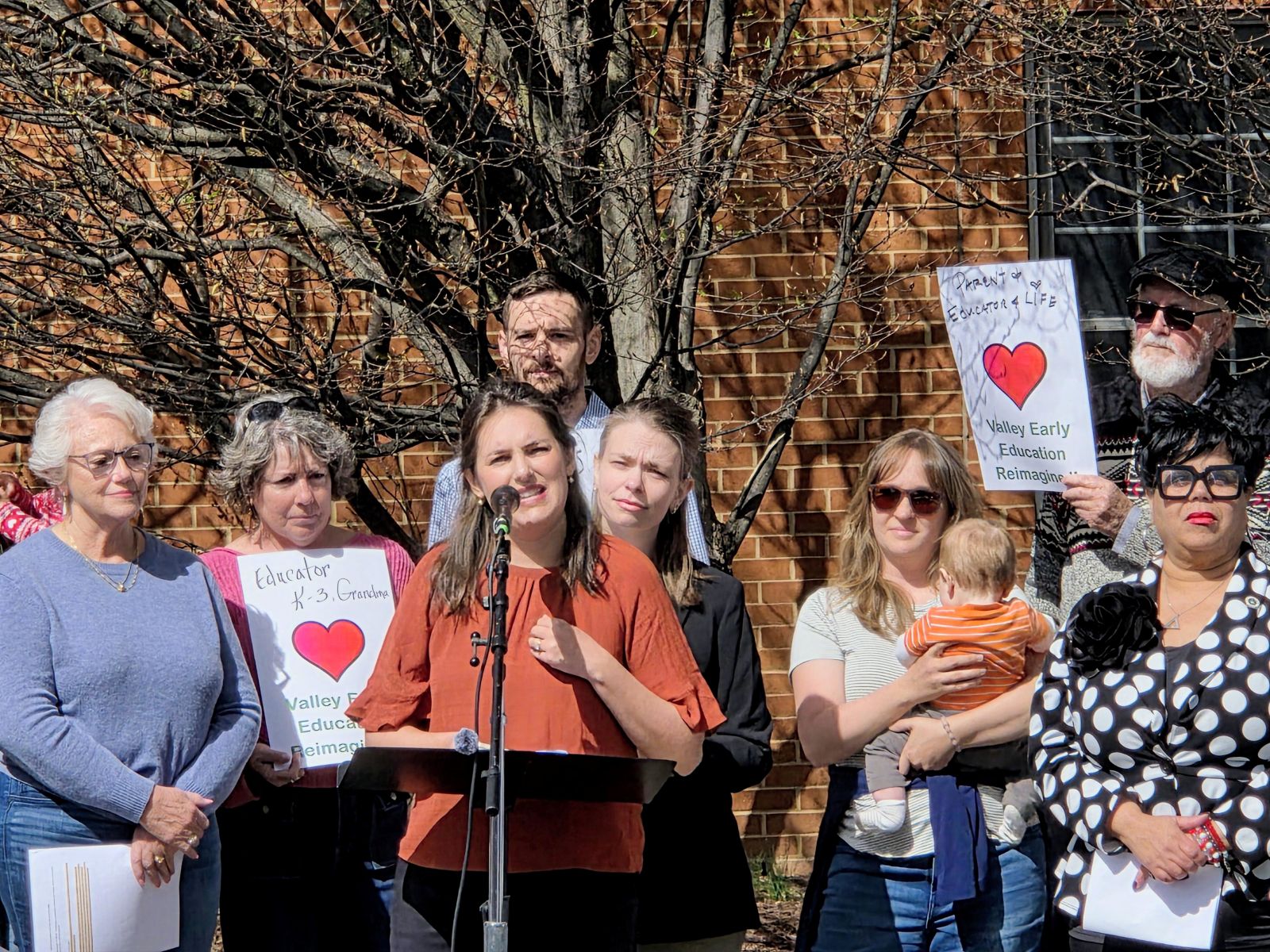
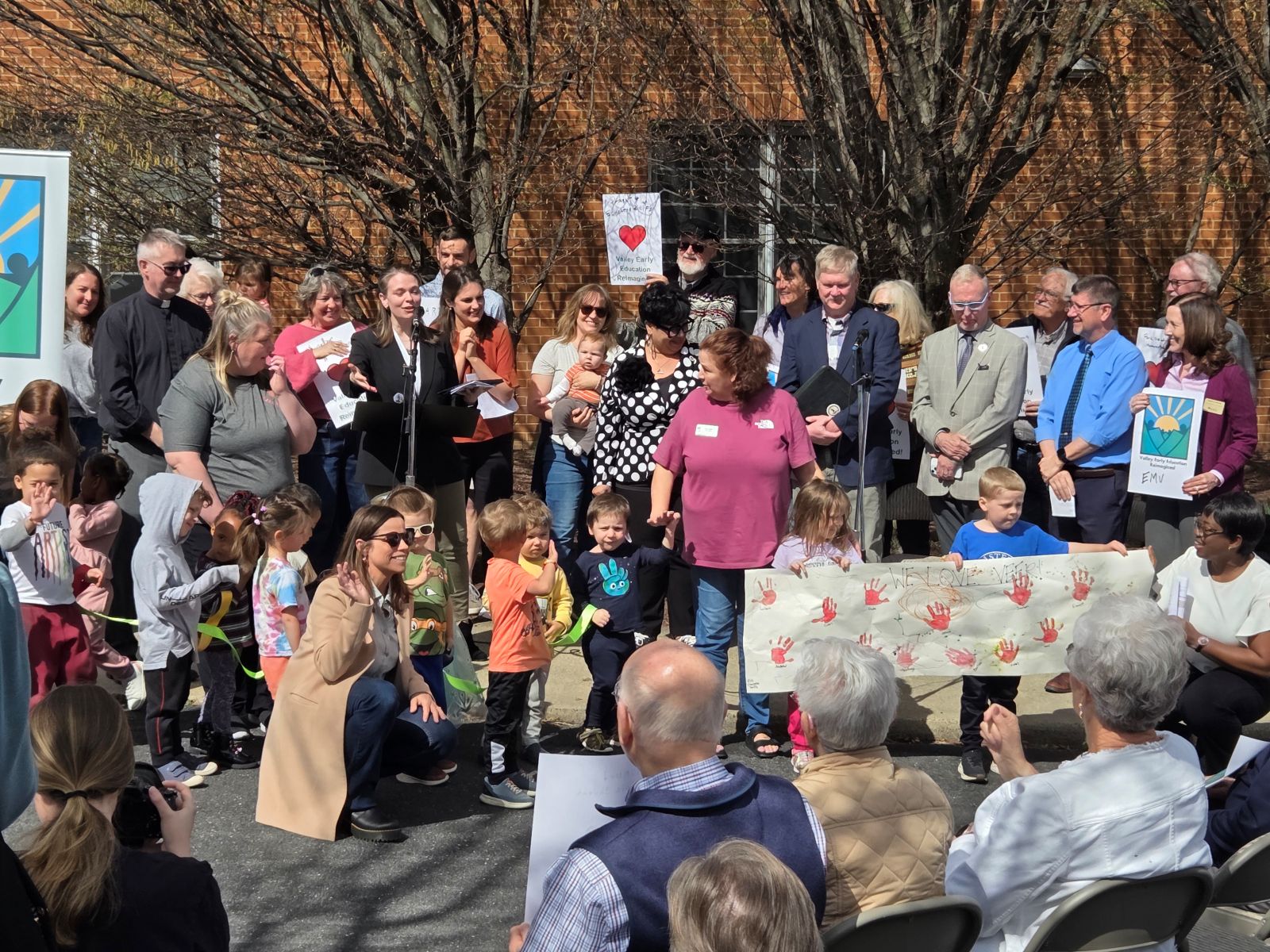
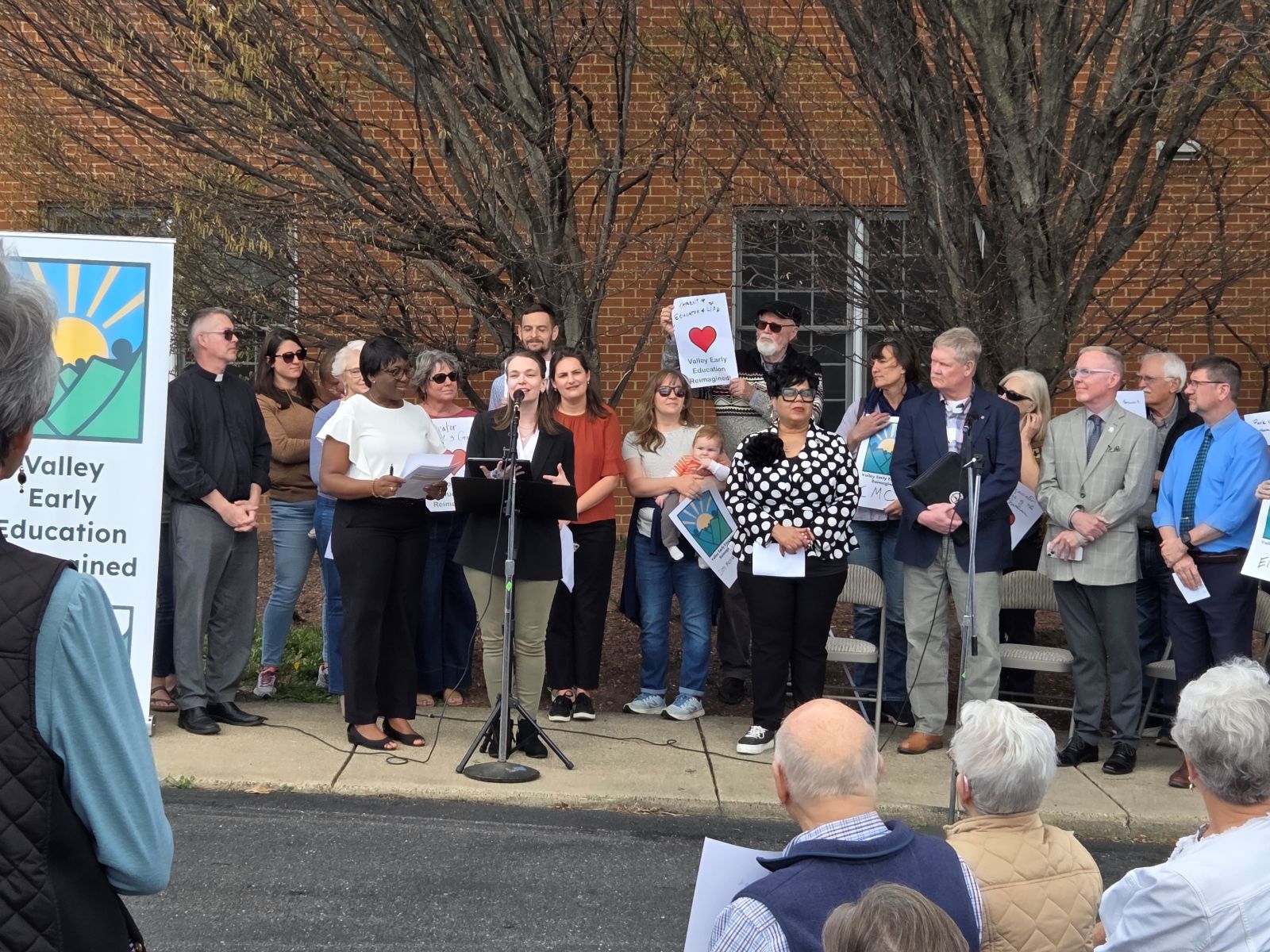
This week, I attended an energizing and hope-filled press conference held in a local congregation’s parking lot. About seventy community members gathered on a sun-drenched but cool Monday morning to hear about the progress of an innovative tri-party association. A new preschool that held the press conference emerged from families who want their children enrolled in a quality program while they work.

With families of preschoolers, the public school superintendent, and city and state politicians in attendance, the innovative preschool model shows how local entities can come together to improve the community.

Valley Early Education Reimagined press conference, Harrisonburg Va., March 23, 2026. E. Yoder photo

There was energy in the press conference. A mother of a boy in the preschool program explained that she could continue teaching at a local high school because her son was well cared for. Another mother detailed her anxious choice between having her children in a good preschool or staying home to care for them.

With kids, educators, pastors, grandparents, and politicians, those who gathered created a sense of purpose and renewed hope for our community. We are in a time of national peril, about which few would disagree. But here in my backyard, less than a mile from where I live, is a new association bubbling up from below, showing what we can achieve together.

Launched by Valley Interfaith Action, of which I’m a part, Valley Early Education Reimagined (VEER) is a new model seeking employers and state officials to help fund preschool expenses.

VEER press conference, Harrisonburg, Va., March 23, 2026. E. Yoder photo

Alexis de Tocqueville, a French traveler and writer who came to the United States in 1831, described the unique way Americans create associations for their own betterment. Tocqueville’s description of associations unfolded before my eyes as speaker after speaker at the March 23, 2026, press conference explained how we in this community could work together for our common good.

The mood was positive and hopeful. Two men thanked me for a recent history lecture before the event began. But when the press conference started, I listened to every word. “Together,” a Church of the Brethren pastor declared, “We are pioneering a sustainable childcare model for Virginia.” And the mayor of Harrisonburg, Virginia, called us to work “together, together, together.” The mayor’s energy was the kind of civility and cooperation that James Madison described in Federalist #10, where factions in society come together, working from the bottom up, to create a better world for the participants.

This community movement, driven by diverse local people working together, offers hope that we can overcome divisions and build a stronger society.

VEER press conference, March 23, 2026, Harrisonburg, Va. E. Yoder photo