Tag Archives: James Madison

A good local association in a time of national peril

This week, I attended an energizing and hope-filled press conference held in a local congregation’s parking lot. About seventy community members gathered on a sun-drenched but cool Monday morning to hear about the progress of an innovative tri-party association. A new preschool that held the press conference emerged from families who want their children enrolled in a quality program while they work.

With families of preschoolers, the public school superintendent, and city and state politicians in attendance, the innovative preschool model shows how local entities can come together to improve the community.
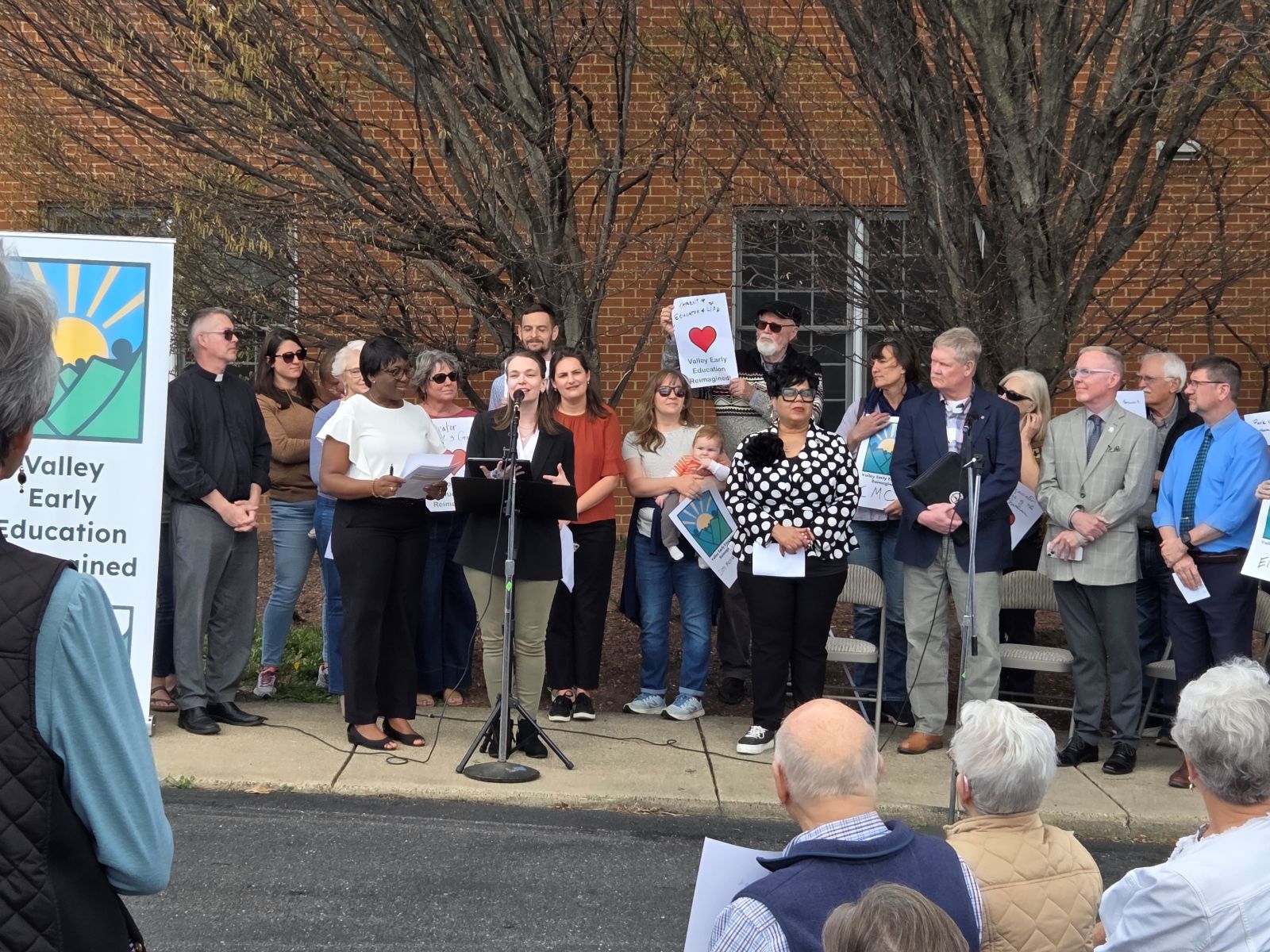
Valley Early Education Reimagined press conference, Harrisonburg Va., March 23, 2026. E. Yoder photo

There was energy in the press conference. A mother of a boy in the preschool program explained that she could continue teaching at a local high school because her son was well cared for. Another mother detailed her anxious choice between having her children in a good preschool or staying home to care for them.

With kids, educators, pastors, grandparents, and politicians, those who gathered created a sense of purpose and renewed hope for our community. We are in a time of national peril, about which few would disagree. But here in my backyard, less than a mile from where I live, is a new association bubbling up from below, showing what we can achieve together.

Launched by Valley Interfaith Action, of which I’m a part, Valley Early Education Reimagined (VEER) is a new model seeking employers and state officials to help fund preschool expenses.
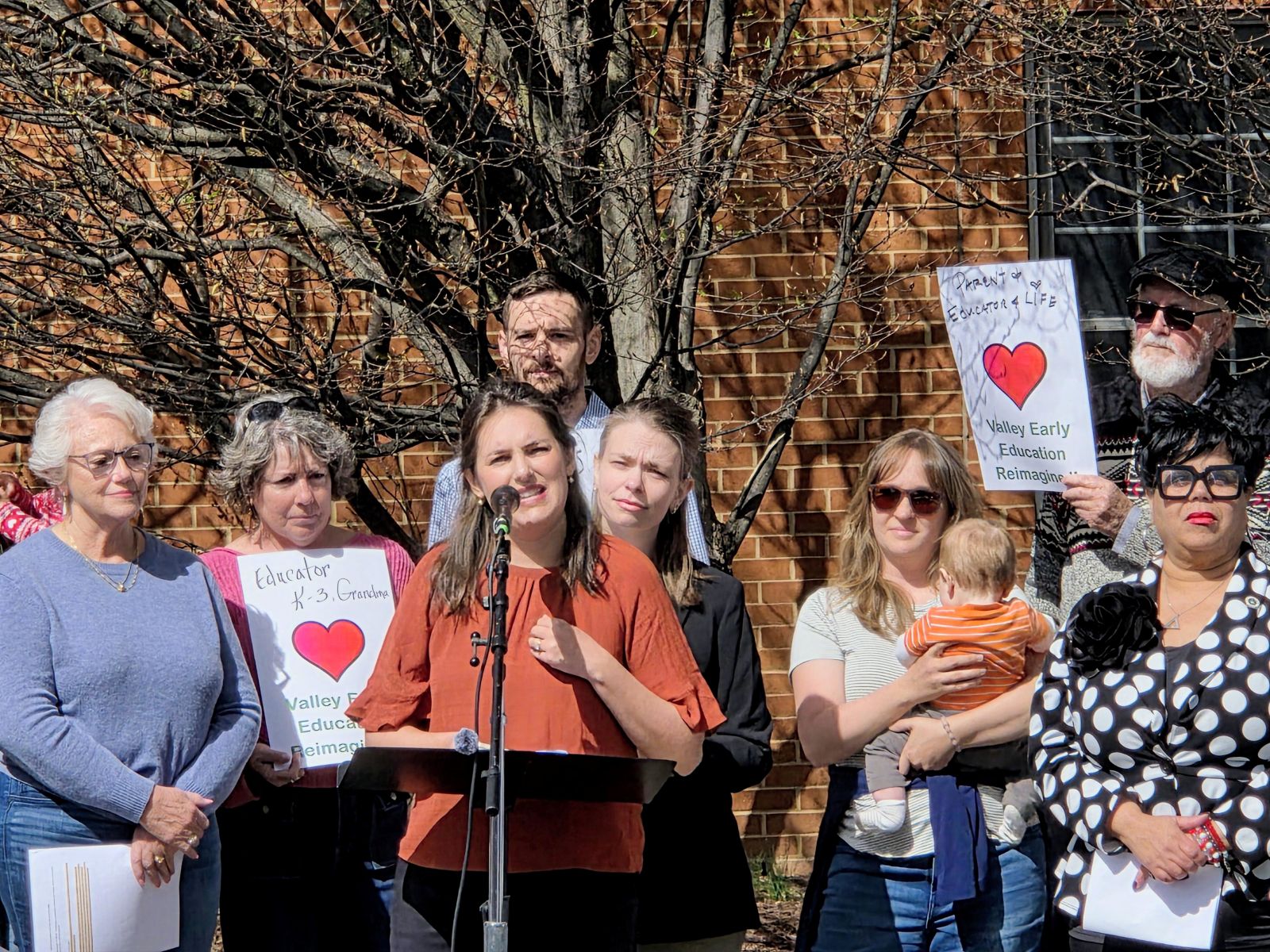
VEER press conference, Harrisonburg, Va., March 23, 2026. E. Yoder photo

Alexis de Tocqueville, a French traveler and writer who came to the United States in 1831, described the unique way Americans create associations for their own betterment. Tocqueville’s description of associations unfolded before my eyes as speaker after speaker at the March 23, 2026, press conference explained how we in this community could work together for our common good.

The mood was positive and hopeful. Two men thanked me for a recent history lecture before the event began. But when the press conference started, I listened to every word. “Together,” a Church of the Brethren pastor declared, “We are pioneering a sustainable childcare model for Virginia.” And the mayor of Harrisonburg, Virginia, called us to work “together, together, together.” The mayor’s energy was the kind of civility and cooperation that James Madison described in Federalist #10, where factions in society come together, working from the bottom up, to create a better world for the participants.

This community movement, driven by diverse local people working together, offers hope that we can overcome divisions and build a stronger society.
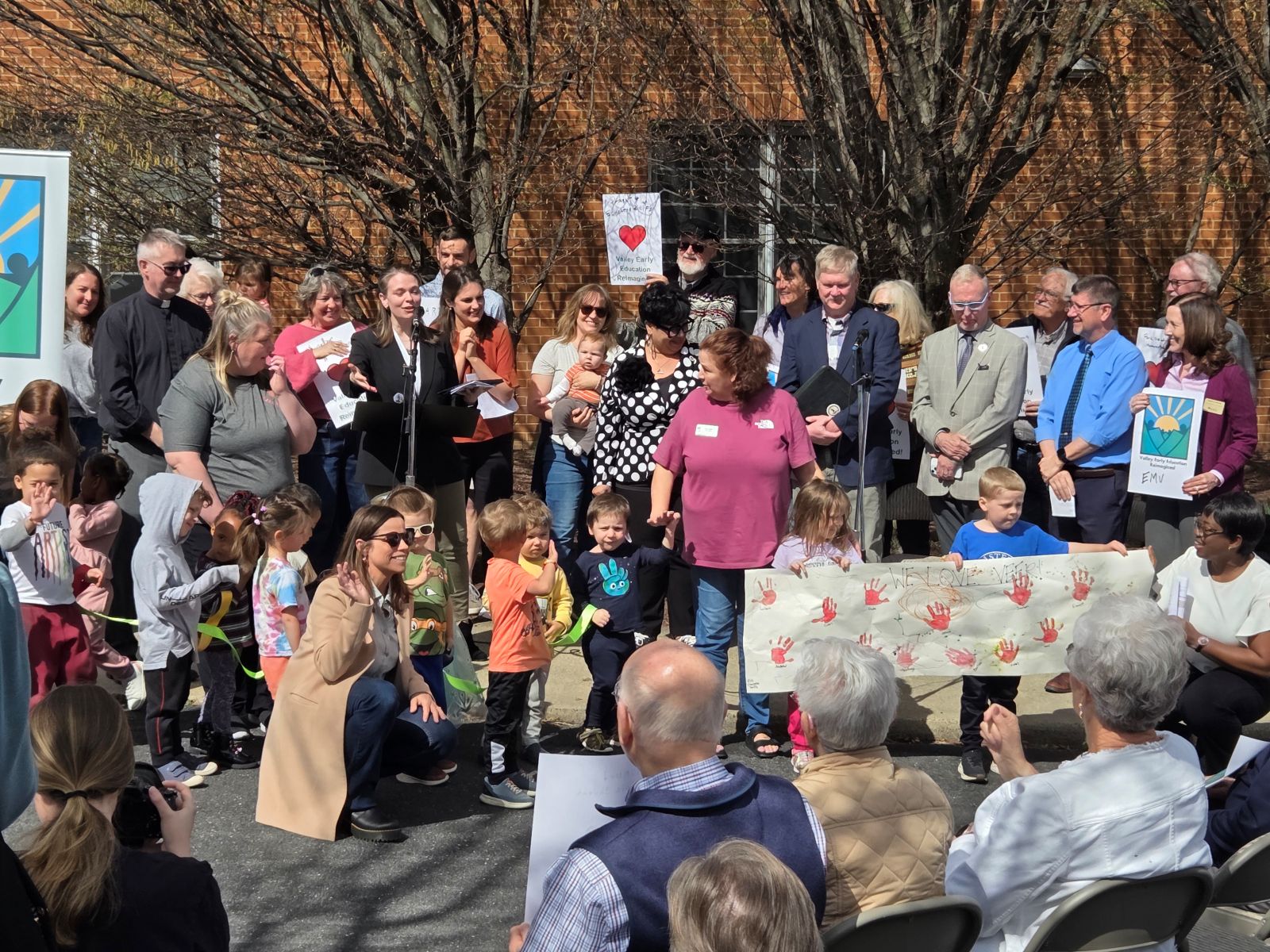
VEER press conference, March 23, 2026, Harrisonburg, Va. E. Yoder photo

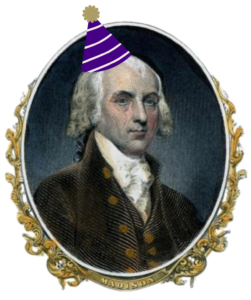
Happy Birthday, James Madison!

James Madison image courtesy of James Madison University, Harrisonburg, Va.

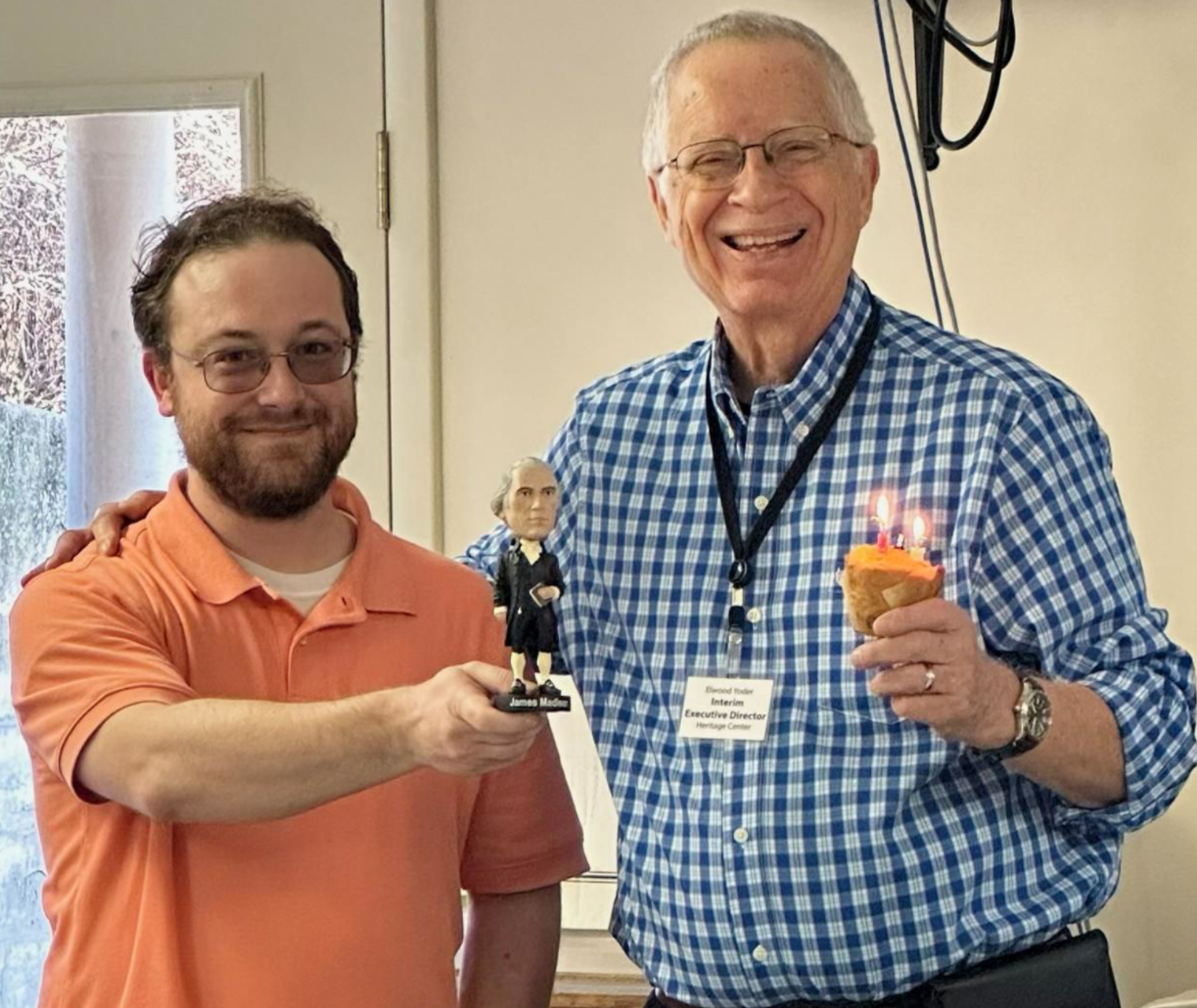
Happy 275th birthday, James Madison! At my job in Harrisonburg, Virginia, I’ve created a small historical exhibit to honor the fourth president, James Madison, from nearby Montpelier, Virginia.

A few days ago, when James Madison University, a major university I can see from the Heritage Center where I work, celebrated James’s 275th birthday, we did the same. We brought in bagel bites, muffins, candles, and a Jimmy Madison bobblehead. About fifteen volunteer carpenters had come to work for the day, and at lunch, around tables, they humored me by singing “Happy Birthday” to James Madison.

In the earlier Julian calendar, Madison was born on March 6. In the Gregorian calendar, adopted in the United States when James was one, his birthday moved to March 16. Take your pick — JMU and the Brethren & Mennonite Heritage Center each had a party in Harrisonburg, Va., on March 6 (Julian), but March 16, 2026 (Gregorian), is Madison’s 275th birthday.

So here’s a tribute to the political philosopher who brought religious freedom to the United States. I’m a Mennonite, and for these 250 years of the United States, my people have been privileged to worship in freedom, even with minority religious beliefs. Madison’s First Amendment says it all: “Congress shall make no law respecting an establishment of religion, or prohibiting the free exercise thereof.”

Celebrating James Madison’s birthday, March 6, 2026
M. Garber photo

Madisonian Checks and Balances

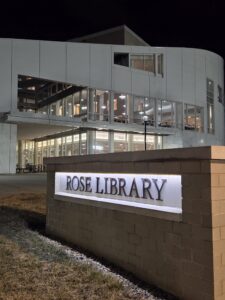
I believe that James Madison would have approved the Supreme Court’s recent overturn of the Trump tariffs. I’m writing this blog on the campus of James Madison University in Harrisonburg, Virginia, named for the chief architect of the U.S. Constitution. The outstanding JMU Rose Library is one of my favorite places to work.

James Madison (1751-1836) developed the concept of checks and balances in the federal government. He envisaged three branches, each of which could check the wrongful constitutional impulses of the others.

James Madison University, Harrisonburg, Va.

The Virginian understood human nature and its tendencies toward self-aggrandizement. “If men were angels,” Madison wrote in The Federalist #51, “no government would be necessary. If angels were to govern men, no government would be necessary.” Perhaps the most politically minded of the nation’s founders, Madison wrote that the federal government must be able to control the governed. Further, he emphasized, the national government is obliged to control itself.

I think that James Madison would have applauded the Supreme Court’s nine-member ruling on February 20, 2026. But to guess how he would have argued and voted had he served on the Court would be mere speculation. The six-member majority ruled that Trump lacked the legal authority to impose his tariffs. The power to tax, the Supreme Court asserted, was Congress’s responsibility, as outlined in Article 1, section 8: “The Congress shall have Power To lay and collect Taxes, Duties, Imposts and Excises.”

It has been eight or nine generations since the U.S. founders wrote the Constitution. On our nation’s 250th birthday, it is not too much to be concerned about the effectiveness of Madison’s checks and balances among the Judicial, Executive, and Congressional branches. For example, the President has declared that he will seek other legal means to collect the import tariffs, thereby circumventing the Court’s ruling. But regardless of the outcome of the Supreme Court’s ruling, the very fact that a presidential action can be stricken, in such divided times as we live in, is remarkable.

There were those in the Constitutional era who wanted state governments to have greater power than the national government. Madison countered that only a strong central government could effectively rule a large republic. Further, he sought a way to keep the national government from becoming too powerful or domineering. Thus, as he read history, especially Montesquieu, he believed that a system of checks and balances at the national level was essential.

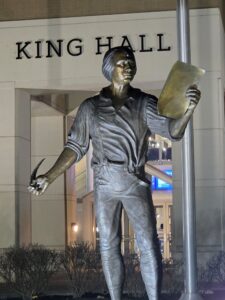
James Madison statue at JMU, Harrisonburg, Va.

While at times it seems to many of us that the U.S. federal government is in perpetual gridlock, what we are actually observing is the sometimes-volatile interplay among three powerful branches of government, each with constitutional authority over the others. President Trump has been impeached twice by the House of Representatives, and each time the Senate acquitted him.

In the flow of national politics today, the Congress, divided and self-absorbed, seems unable to use the power granted it in the Constitution. When the Supreme Court, however, asserted its constitutional power and ruled 6-3 against the President’s tariff policies, it seems to me that James Madison would have applauded the nerve of those who voted against one of the most powerful chief executives in U.S. history.

James Madison’s defense of religious dissenters

We need a new Enlightenment. James Madison, a proponent of Enlightenment values, spoke for the rights of religious minorities in Virginia and in the new United States. Madison defended the rights of Baptists, Quakers, Brethren, and Mennonites, who were dissenters from the sanctioned Anglican church of the Virginia commonwealth. Madison argued that they should be able to hold their beliefs independently of the state’s official religion.

Among Madison’s many political involvements, he served in the Virginia House of Delegates for two years, 1784-1786. Brethren and Mennonites in the Shenandoah Valley sent a petition for exemption from militia duty to the Virginia delegates in 1784. Again, in 1785, a group of 71 Mennonites submitted another petition to the Virginia House of Delegates seeking exemption from militia duty because their faith did not allow them to carry or use weapons in military service.1

During his years serving in the Virginia House of Delegates, Madison wrote a historic defense of religious freedom. He asked in the widely read essay whether the “Quakers and Menonists were the only sects that think it is unnecessary and unwarrantable to support their Religions compulsively?”2 Madison argued that each Christian denomination in Virginia should be able to worship freely as they choose. Madison had been baptized into the Anglican church and was from the privileged class. Still, he heard and read about Baptist ministers whom the authorities jailed for preaching their doctrine in Virginia, which upset him. A sheriff near Luray, Virginia, chased Mennonite Jonas Blosser Jr. into hiding because Blosser’s nonresistant convictions prevented him from mustering (marching) with the local militia.

Madison’s determination to establish the new country on the principles of freedom and equal rights for all religious groups became woven into the fabric of the new United States. Madison persuaded the Virginia delegates in Richmond to approve a “Statute for Religious Freedom,” written years earlier by Thomas Jefferson.3 The Statute disestablished the Virginia state religion and supported tolerance for all believers, regardless of denomination.

Elwood Yoder

Four years later, in 1789, Madison wrote the First Amendment for the U.S. Constitution, guaranteeing that “Congress shall make no law respecting an establishment of religion, or prohibiting the free exercise thereof.” In the Second Amendment, Madison defended the right of all to bear arms, and he added a phrase in his original draft that “no person religiously scrupulous of bearing arms shall be compelled to render military service in person.”4 The phrase that would compel no one to render military service if opposed on religious grounds passed in the U.S. House but not in the Senate.

The 1780s were an axial time in Virginia and U.S. history, a hinge era when minority beliefs came to be accepted. James Madison, an Enlightenment philosopher, articulated a defense of dissenting religions in Virginia and then again during the formative political moments of the United States.

Researching the origins of freedom of religion in the 1780s is why I’m starting to think we need another era of Enlightenment. We need a resurgence of the belief that we must respect all people for their beliefs, nationalities, convictions, and heritage. The Enlightenment ideas of James Madison inspire me, and it’s time for a new Enlightenment in the twenty-first century.

  1. Richard K. MacMaster, Samuel L. Horst, and Robert F. Ulle, Conscience in Crisis (Scottdale, PA: Herald Press, 1979), 331-334. ↩︎
  2. “Founders Online: Memorial and Remonstrance against Religious Assessments, 1785,” National Archives and Records Administration, accessed February 15, 2026, https://founders.archives.gov/documents/Madison/01-08-02-0163. ↩︎
  3. Contributor: John A. Ragosta, “Virginia Statute for Establishing Religious Freedom (1786),” Encyclopedia Virginia, February 18, 2025, https://encyclopediavirginia.org/entries/virginia-statute-for-establishing-religious-freedom-1786/. ↩︎
  4. https://constitution.congress.gov/browse/essay/amdt2-2/ALDE_00013262/ ↩︎