In his first inaugural address, March 4, 1861, Abraham Lincoln offered one of the most optimistic and beautiful turns of phrase in U.S. political history. Lincoln’s reference to the “better angels of our nature,” symbolizing our highest virtues and moral compass-at the end of his long speech still rings out today: “The mystic chords of memory, stretching from every battlefield and patriot grave to every living heart and hearthstone all over this broad land, will yet swell the chorus of the Union, when again touched, as surely they will be, by the better angels of our nature.”
Seven southern states had already seceded from the United States; other states, like my own, Virginia, were poised to follow. The political outlook for the Union was gloomy. Most realized war was inevitable.
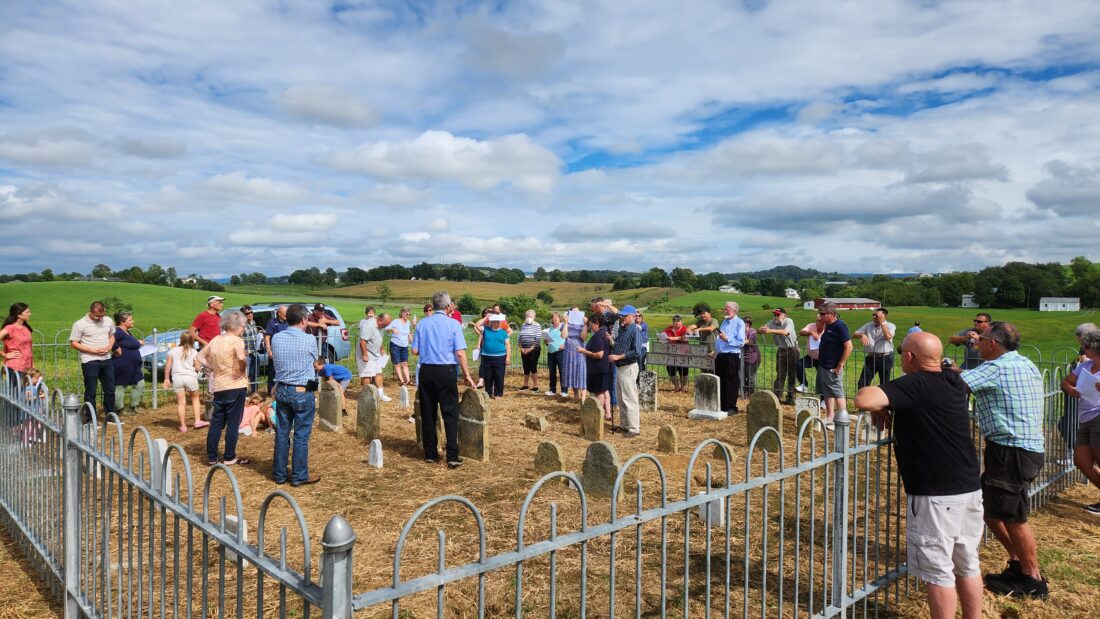
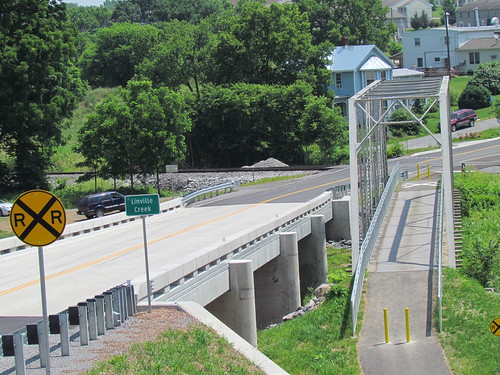
In 1861, Elizabeth Shank Showalter, 30, lived seven miles north of where I live today in Harrisonburg, Va. “Betsy,” as she was affectionately called, wanted to attend Lincoln’s inaugural address in nearby Washington.1 Why would a Mennonite woman leave her husband and four young children at home in Broadway, Va., travel north to Winchester, and then pay for a train ride to the nation’s capital? Probably, one of my historian friends has guessed that it was because she had neighbor friends who were going to the inauguration.2 Some of Betsy’s neighbors were second- and third-cousins of Lincoln, who still lived in the Shenandoah Valley. Years earlier, Abraham Lincoln’s father’s family moved west from Virginia to Kentucky. Abraham himself never lived in Virginia. “Virginia John” Lincoln moved to the Shenandoah Valley in 1767, and he is buried at the Lincoln Homestead in Linville, Va.
Lincoln delivered the standard rhetoric of a political speech at his inauguration, but then he used poetic license in the closing to appeal to his listeners’ hearts. One wonders how many of the thousands who attended actually heard his voice without a public address system. Perhaps Betsy Showalter and others had printed copies of his speech in their hands.
We are divided today, but not like when Abraham Lincoln was inaugurated. There are those all around me on the strident left and on the intractable right. The vast majority of Americans are like me, I think, in the two-thirds middle category, who on most issues can be reasoned with and persuaded to think differently with good ideas and information.
I’d like to appeal to the “better angels of our nature,” to grasp, as Lincoln stated in his inaugural speech, that “we are not enemies, but friends.” It’s impossible to ignore the hellishness of the American Civil War, especially as it was experienced by Betsy Showalter’s family and others in the Shenandoah Valley who suffered through the burning of their barns, mills, and some houses. Lincoln appealed to the better angels of our nature, but he also demonstrated the worst angels of our nature in the brutal Civil War that killed hundreds of thousands. I still see signs of southern resistance as I travel throughout the Shenandoah Valley today. The raw feelings are not healed, much as we’d like to think they are.
One moment of “better angels of our nature” stands out to me in the American Civil War. On the night of October 5, 1864, Union General Sheridan gave orders to burn every barn and home in the vicinity of Dayton, Va. When an unknown Union sergeant and his men came to the farmstead of Peggy Heatwole Rhodes, intending to burn everything, Peggy pleaded for the men to preserve her house and barn. The night sky was full of fire when Peggy begged for mercy. While the sergeant listened to Peggy, his men looted the house, taking whatever they wanted.3
Peggy Rhodes, with five young children, explained that she had helped the Union cause by secretly hiding and assisting objectors to the war who fled Virginia to Northern States. She explained that her husband, who had just died a few months earlier, did not fight for the Confederacy. The Union sergeant ordered one of his men to ride over the hill to the church cemetery and confirm Peggy’s story. When her story was confirmed, the sergeant, under the better angels of his nature, blew his whistle, which meant that his troops were to move on to the next farm. Peggy’s barn and house were preserved, and the log barn still stands today.
I can describe more moments in the Civil War in Virginia, which I know something about, where better angels prevailed. I shall detail more stories in the coming months. Join me in 2026 on a journey to discover the “better angels of our nature” that occasionally prevail.
- Elizabeth “Betsy” (Shank) Showalter (1831–1913) married Michael H. (Herbert) Showalter (1831–1905), and Michael and Elizabeth Showalter are buried at Weavers Mennonite Church, Harrisonburg, Va. ↩︎
- Elwood E. Yoder, Under the Oaks: A History of Trissels Mennonite Church, Broadway, Virginia, 1822-2022 (Broadway, Va.: Trissels Mennonite Church, 2022), 75. ↩︎
- David S. Rodes, Norman R. Wenger, and Emmert F. Bittinger, Unionists and the Civil War Experience in the Shenandoah Valley, vol. 3 (Harrisonburg, VA: Valley Brethren-Mennonite Heritage Center, 2005), 691-714; and, ↩︎