A Ride up the Washington Monument  

When my five-year-old granddaughter first saw the Washington Monument in the U.S. Capital, she called it a “big post.” At 555 feet tall, the obelisk looked enormous to her, and she came up with a funny phrase that we, as a family, used during the three days of our August 2026 visit.

We managed to get tickets to ride an elevator to the 490-foot level observation area at the top. It had rained hard in Washington, and we were soaked through and through when it was finally our turn to ride up. Lots of other folks were also wet from the rain, but a large crowd gathered when the weather broke so that officials could resume elevator rides.
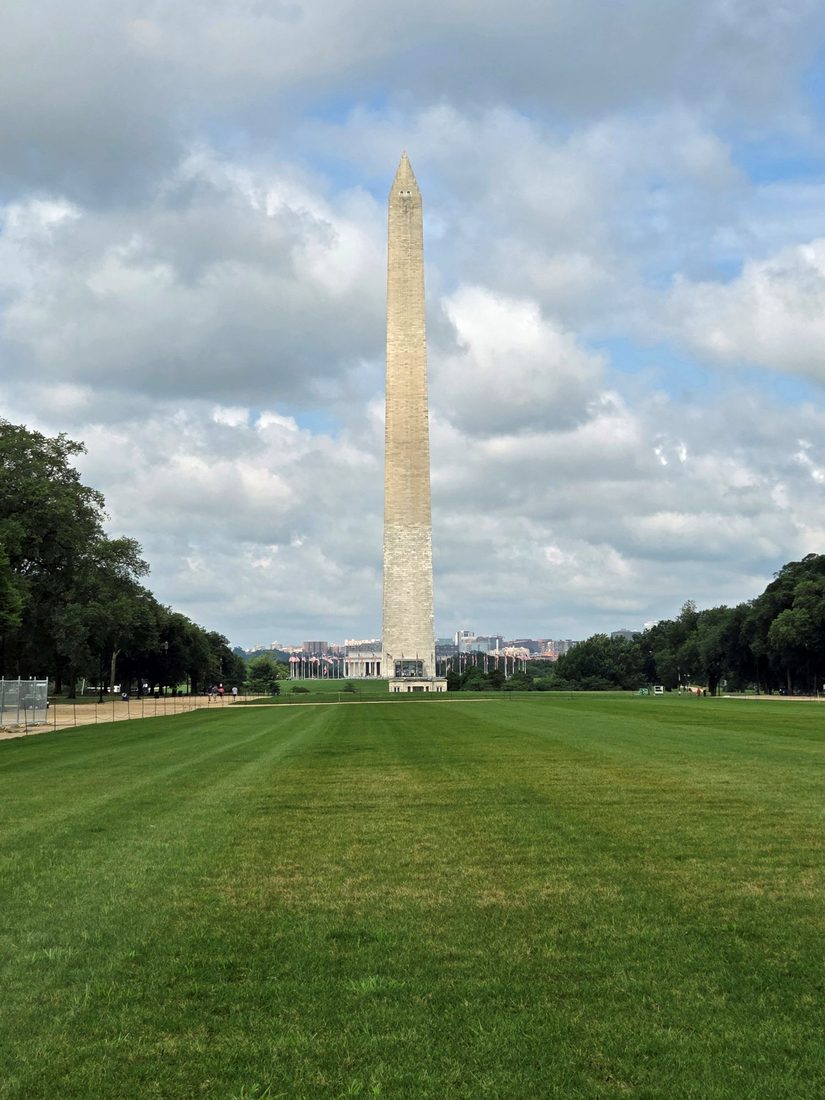
Washington Monument, August 3, 2026 (photo by Elwood Yoder)

The Washington Monument took a long time to build and has been closed at least three times, maybe more. I’ve taken high school groups to Washington over the years and only remember one time I could actually take students to the top. We told the students not to bring backpacks, but one brought his backpack and had to leave it unattended on the ground during our trip. His backpack was waiting for him a half hour later.

I took my telephoto lens and DSLR camera to the top of the Monument. I got great photos of the city. In the line waiting for the elevator ride down, my wife pointed out a saying of George Washington on the wall: “My first wish… is to see the whole world in peace, and the inhabitants of it as one band of brothers, striving who should contribute most to the happiness of mankind.”
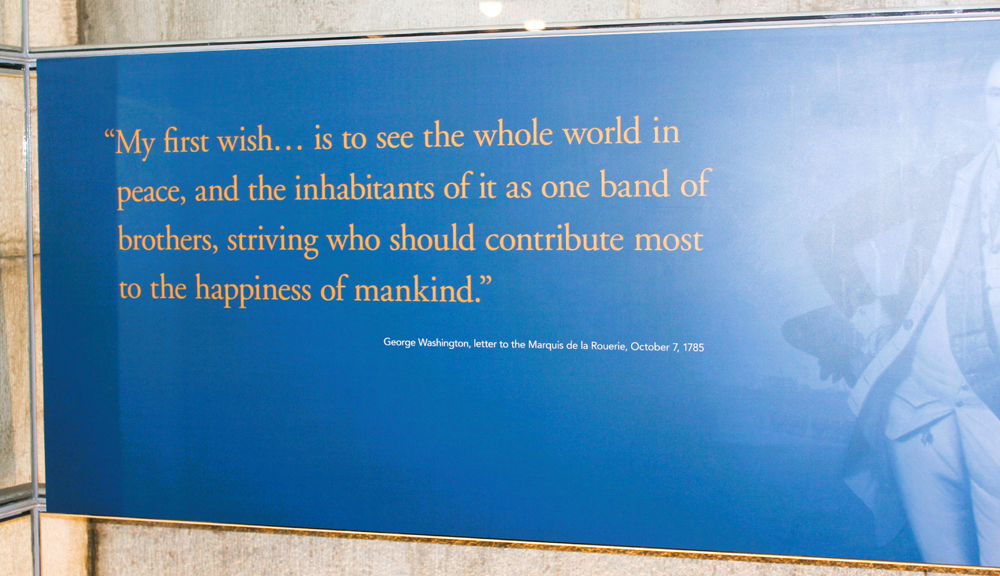
Washington Monument August 2, 2026 (photo by Elwood Yoder)

I hunted for Washington’s letter to Armand-Charles Tuffin in 1785 and found it online.1 What a great wish expressed by our first president. By 1785, Washington and others knew the Articles of Confederation desperately needed revision. And after his military career, in which Washington led the revolutionaries to victory over the British, Washington wrote that he never expected to draw the sword again.
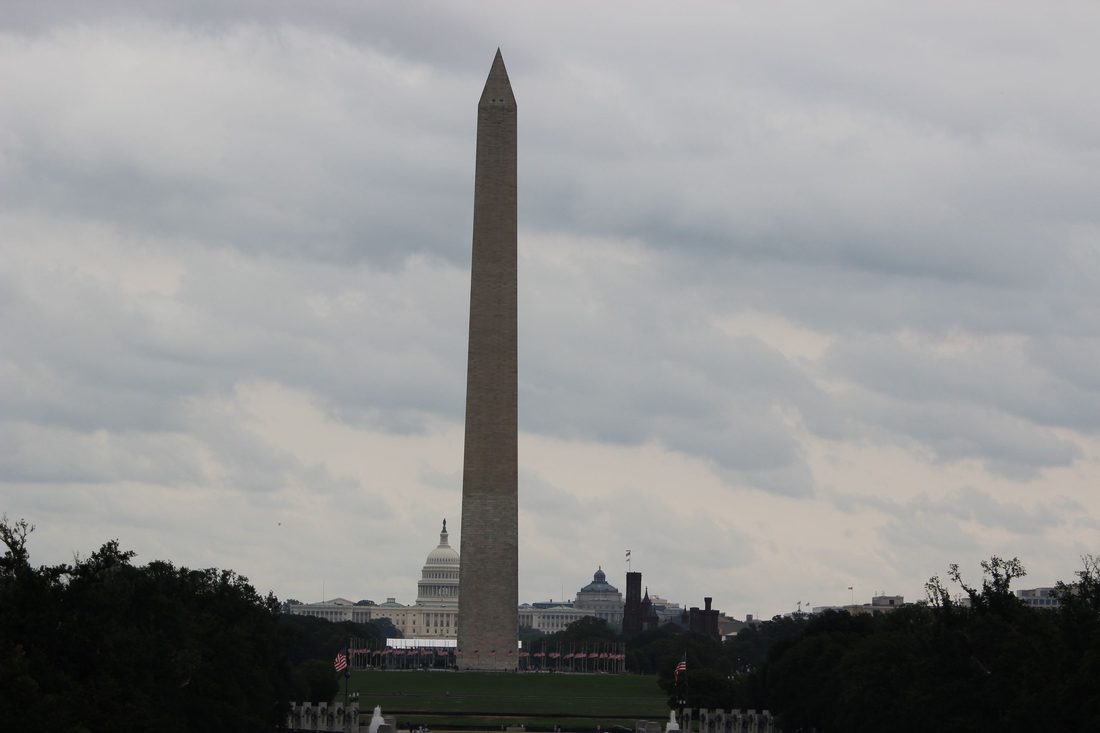
Washington Monument August 2, 2026 (photo by Elwood Yoder)

Washington’s 1785 letter is an expression of the better angels of our nature. He had seen and experienced war, but he wrote that his first wish is to see the whole world in peace. Our August 2026 trip was probably my third time to ride an elevator to the top of the Monument. Finding the Washington quote about desiring to see the whole world in peace makes me want to take more of my grandchildren to see the “big post” in Washington, D.C. And I will show them the quote from our first president about his hopes for peace among the world’s people. It is also my hope.
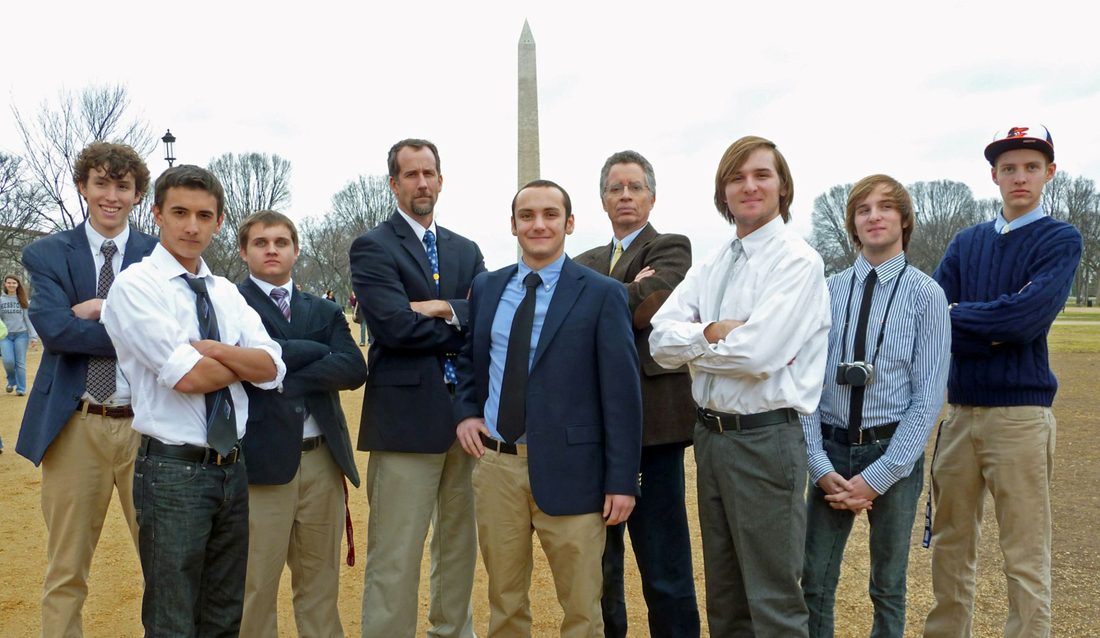
Washington D.C. World History class field trip, January 30, 2013 (history teacher Elwood Yoder fourth from right)

  1. https://founders.archives.gov/documents/Washington/04-03-02-0263?utm_source=chatgpt.com ↩︎

Trump’s War on Iran

The President’s war on Iran is not the same as Thomas Jefferson’s call for an “empire of liberty.” Jefferson argued for expanding the American ideal of a republic in which individuals could prosper, practice their chosen religion, and participate in government as citizens. Indeed, Jefferson ignored the rights of indigenous people groups in the American West and the rights of the enslaved. The third president wanted an empire of yeoman farmers spread from ocean to ocean across North America, in the context of which he wrote about an “empire of liberty.”

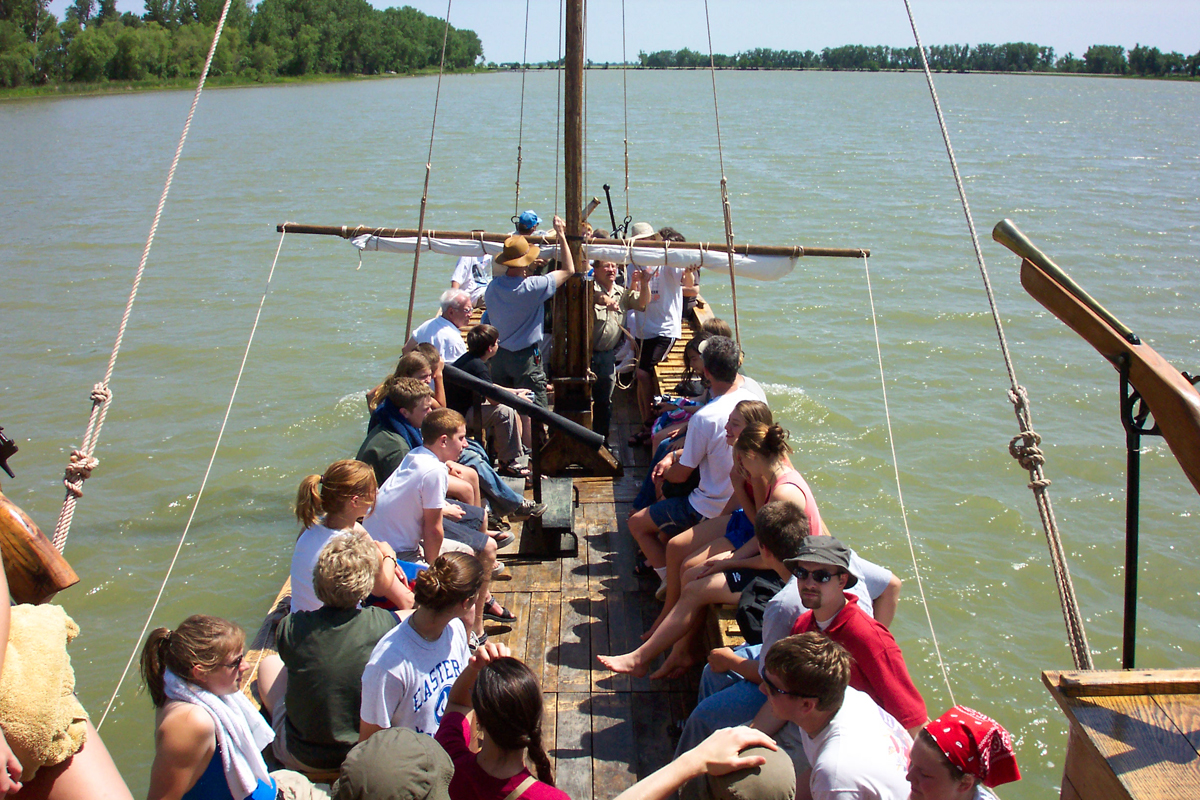
For twenty-eight days in June of 2003, eight teachers and 22 students set out on a journey to retrace the Lewis & Clark journey from 1803-1806. We traveled from Harrisonburg, Va., to the West Coast and back, driving over 5,000 miles. I led the history side of the camping expedition. One of the questions we worked on was to analyze Jefferson’s call for an “empire of liberty.”

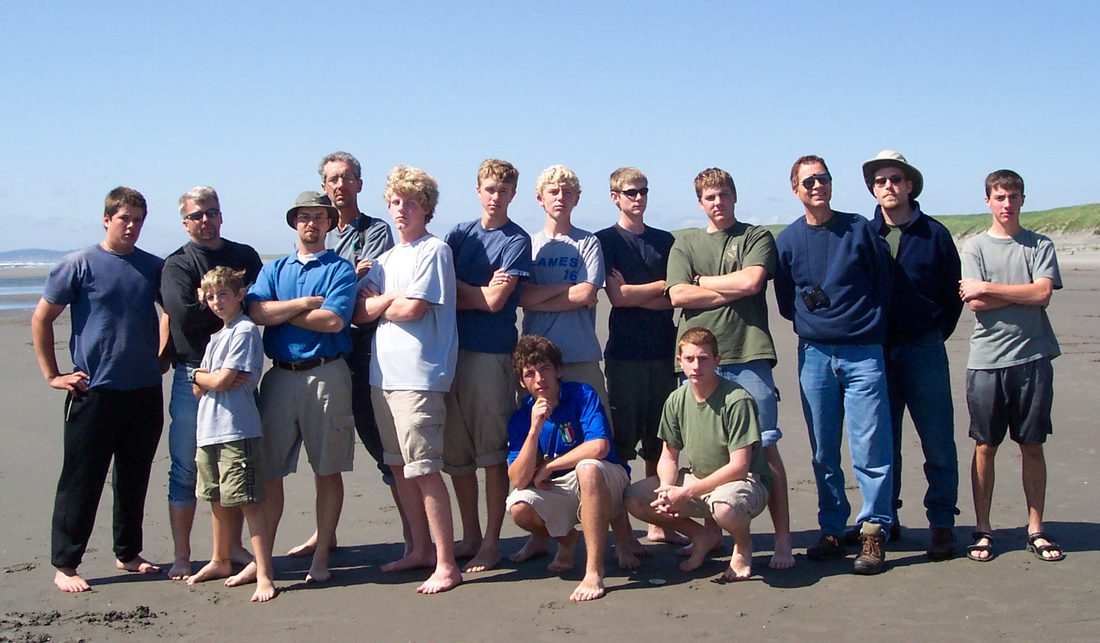
Students and teachers on the Missouri River, with Lewis & Clark, 2003

Students and teachers read the primary sources, asked scholars and experts along the trail what they thought, and drew our own conclusions. I came to hold that Jefferson wanted to expand the freedoms of the country’s founding era across the continent. I did not find that Jefferson was an imperialist in the modern sense of the word. The Louisiana Purchase fell into Jefferson’s lap, and he took advantage of it, to be sure. Unfortunately, later presidents used Jefferson’s “empire of liberty” to expand and conquer in imperialistic ways.

The war of the United States against the country of Iran is of a different kind than Jefferson’s war on Tripoli or his expansionism across the North American continent in the early 1800s. In my opinion, Iran does need to be stopped from developing nuclear weapons, but the attack by the United States against Iran should be stopped. However, to use Jefferson’s war approach in the First Barbary War, 1801-1805, negotiations need to be firm and produce results that are inviolable.

When our motorcoach load of students and teachers reached the West Coast and saw the Pacific Ocean, we were giddy with excitement and happiness. We had retraced Lewis and Clark’s journey. Never mind that the Iraq War had just begun and U.S. ground troops invaded a Middle Eastern country. Lewis & Clark 2003, an expedition of learning and inquiry from our small Harrisonburg high school, had uncovered the joys of reading, studying, asking open-ended questions, and trying to determine what Jefferson meant by his “empire of liberty” phrase. When we dipped in the Pacific Ocean on June 23, 2003, we were optimistic about the country’s future. I hope and pray for a return of that euphoria we felt when sticking our toes in the Pacific Ocean. We need such optimism today.

Lewis & Clark students and teachers at the Pacific Ocean, June 23, 2003