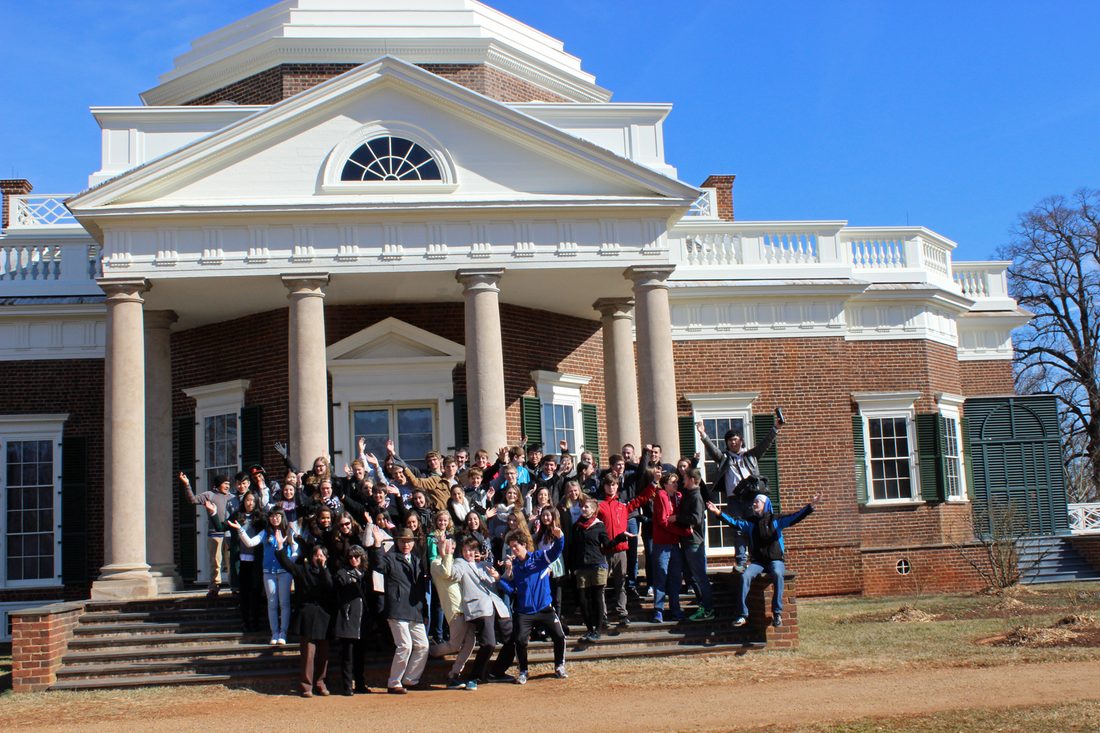
The third of Thomas Jefferson’s self-evident truths has been on my mind during this 250th anniversary. Is the “pursuit of happiness” really an unalienable right for all people, in the same breath as life and liberty? I don’t think so, and I wish the Monticello president had chosen a different word or phrase, like the pursuit of meaning, virtue, or service.
I watched most of the naturalization event for 74 new U.S. citizens that took place at Monticello on July 4, 2026. High on Jefferson’s hill above Charlottesville, Virginia, about an hour’s drive from my home, I listened to a half dozen newly minted citizens express their gratitude. They came from Switzerland, Taiwan, Syria, Mexico, Honduras, and Guatemala. They had worked, sometimes for years, to reach their naturalization ceremony. Words like “gratitude,” “proudest moment,” “dream come true,” and “so grateful to God” poured from their hearts when they spoke to over 3000 in attendance.
Yes, they or their parents pursued happiness, and they migrated to the U.S. to find it. But happiness is not really what they sought. They wanted to live freely, to pursue goals of service and involvement in their new American communities. The immigrant from Switzerland said, “My wish, my desire, and my pledge are that I will always be a citizen who gives more to the community and to the country than I take.” That’s a great tone and goal that moves far beyond the more trivial “pursuit of happiness.”
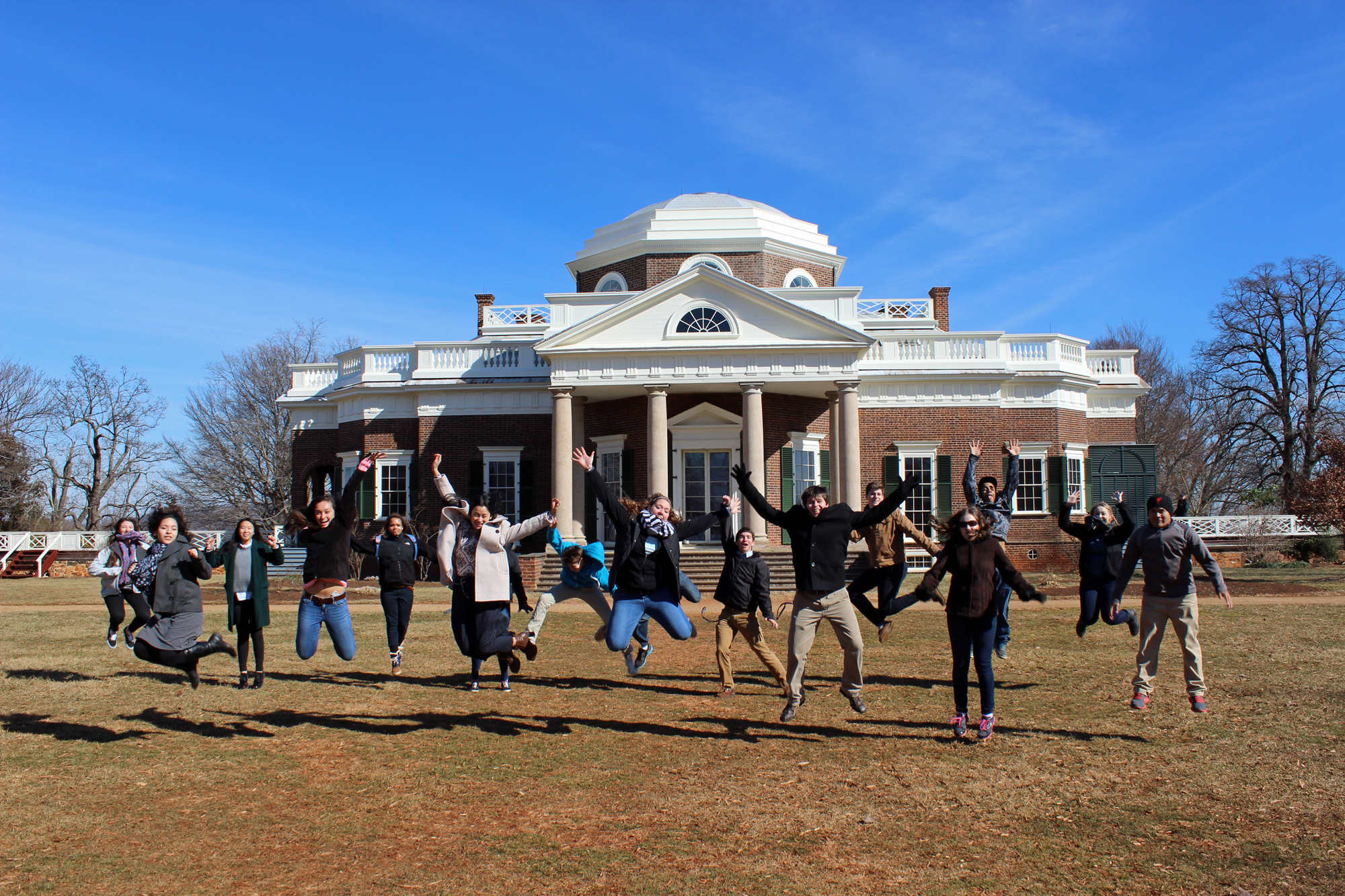
I’ve taken high school students to visit Monticello several times during my career as a history teacher. While a visit to Jefferson’s grand palace on a hill is required of all 4th graders who live in Harrisonburg, Virginia, I often found that, for whatever reason, some of my high school students had never visited the home of our third president.
In 2015, I took other teachers and my high school juniors in world history class to visit Monticello and the nearby University of Virginia. We discovered that Jefferson lived a life of privilege, was wealthy, and had his work done by enslaved people. But on a cold day in February, we had a grand day at Monticello, and the kids really did want to find out why Jefferson and his vision inspire me so much. We clowned around, laughed, toured the grounds, and it was a highlight of my teaching career.
While I worked in a small private school in Harrisonburg, the students came from families that had migrated to America from all over the globe. They came not so much to pursue “happiness” as to start new lives, to serve the church or community, and to improve their economic opportunities. Happiness is a by-product of our search for meaning and purpose, which often emerges over time, but it’s not usually a noble goal in people’s lives at the beginning. Jefferson was born into wealth, inherited land, and was an oligarch. And the fact that women, the enslaved, and immigrants were secondary citizens prompted him to switch from John Locke’s “ownership of property” to “the pursuit of happiness.” I wish a different thought had entered Jefferson’s mind in that historic 1776 moment.