Tag Archives: Eastern Mennonite School

What about “the pursuit of happiness”?

The third of Thomas Jefferson’s self-evident truths has been on my mind during this 250th anniversary. Is the “pursuit of happiness” really an unalienable right for all people, in the same breath as life and liberty? I don’t think so, and I wish the Monticello president had chosen a different word or phrase, like the pursuit of meaning, virtue, or service.

I watched most of the naturalization event for 74 new U.S. citizens that took place at Monticello on July 4, 2026. High on Jefferson’s hill above Charlottesville, Virginia, about an hour’s drive from my home, I listened to a half dozen newly minted citizens express their gratitude. They came from Switzerland, Taiwan, Syria, Mexico, Honduras, and Guatemala. They had worked, sometimes for years, to reach their naturalization ceremony. Words like “gratitude,” “proudest moment,” “dream come true,” and “so grateful to God” poured from their hearts when they spoke to over 3000 in attendance.

Yes, they or their parents pursued happiness, and they migrated to the U.S. to find it. But happiness is not really what they sought. They wanted to live freely, to pursue goals of service and involvement in their new American communities. The immigrant from Switzerland said, “My wish, my desire, and my pledge are that I will always be a citizen who gives more to the community and to the country than I take.” That’s a great tone and goal that moves far beyond the more trivial “pursuit of happiness.”

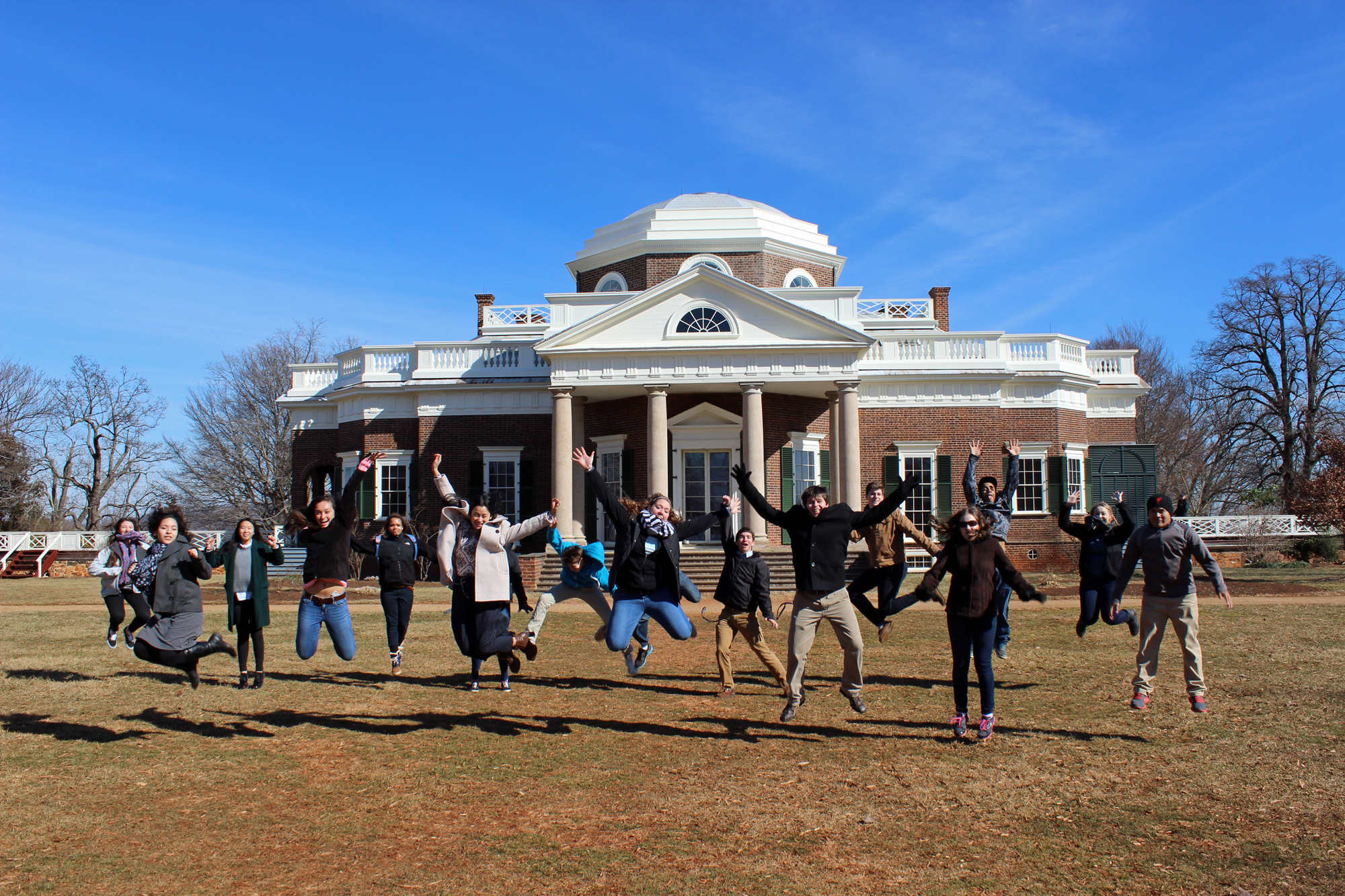
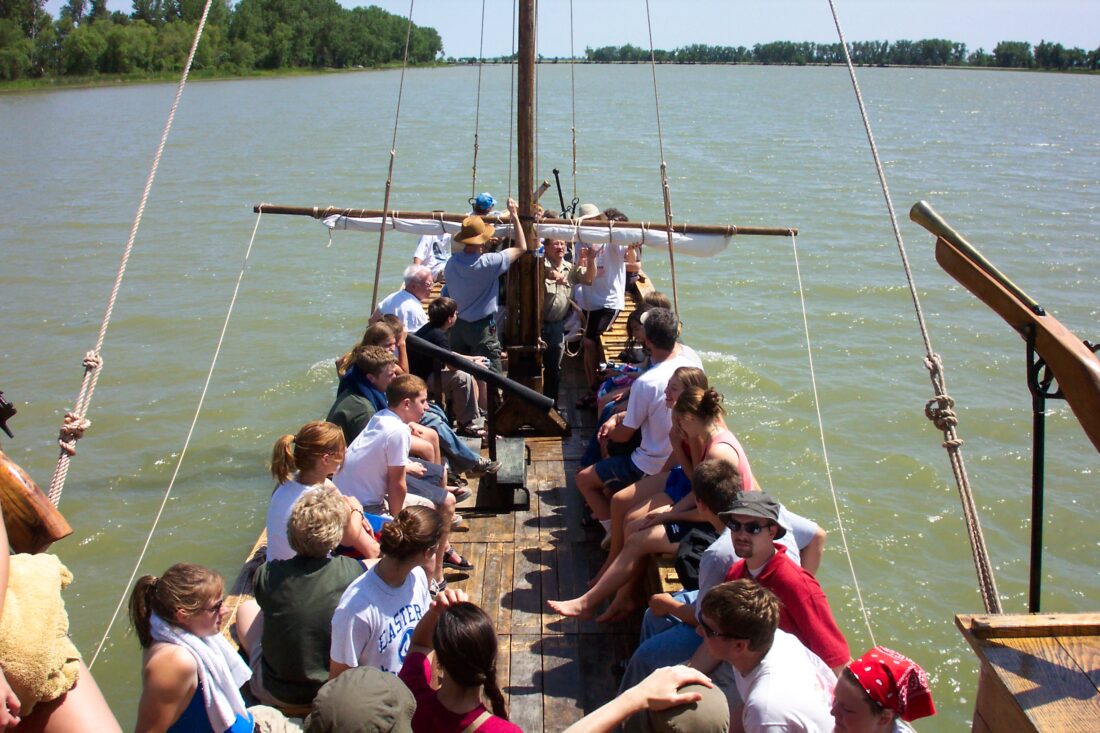
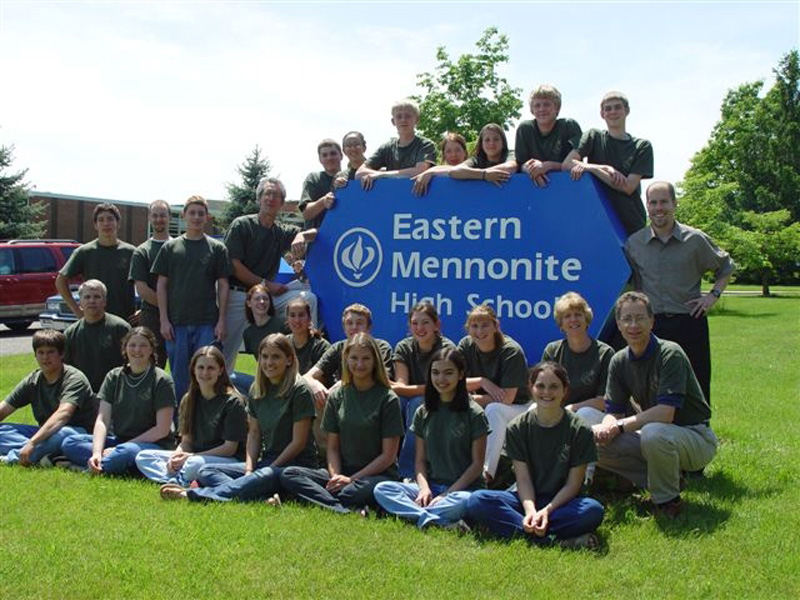
World History students at Monticello with their teacher, Mr. Yoder, February 2015

I’ve taken high school students to visit Monticello several times during my career as a history teacher. While a visit to Jefferson’s grand palace on a hill is required of all 4th graders who live in Harrisonburg, Virginia, I often found that, for whatever reason, some of my high school students had never visited the home of our third president.

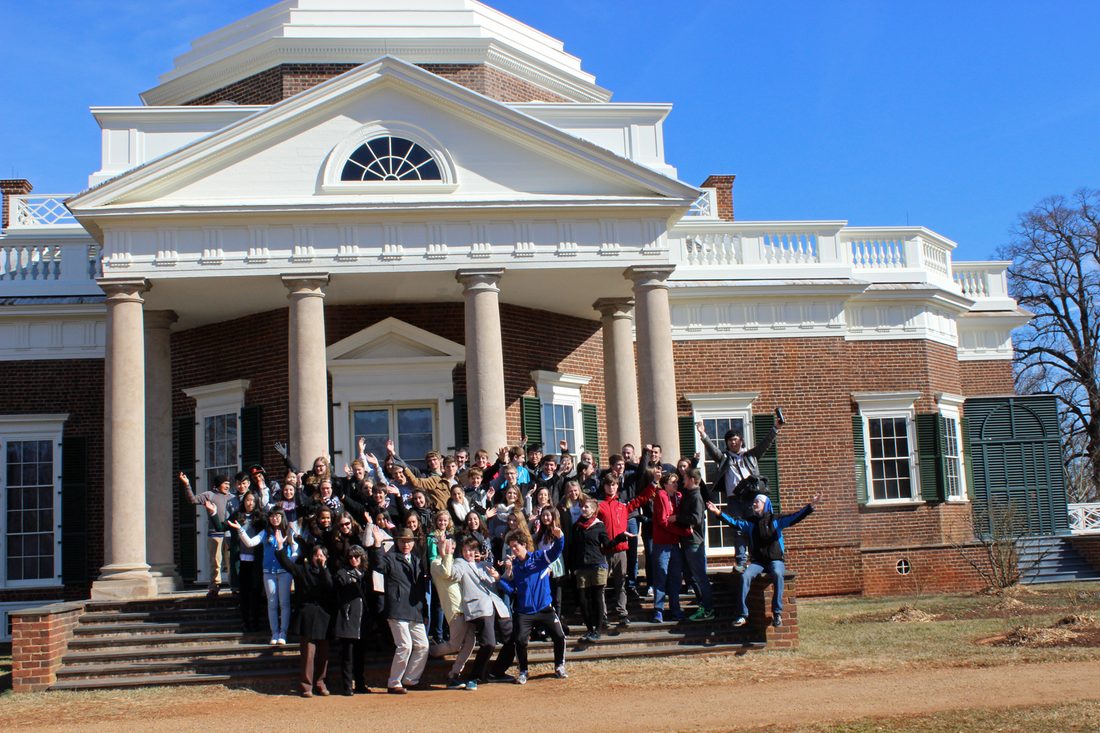
In 2015, I took other teachers and my high school juniors in world history class to visit Monticello and the nearby University of Virginia. We discovered that Jefferson lived a life of privilege, was wealthy, and had his work done by enslaved people. But on a cold day in February, we had a grand day at Monticello, and the kids really did want to find out why Jefferson and his vision inspire me so much. We clowned around, laughed, toured the grounds, and it was a highlight of my teaching career.

While I worked in a small private school in Harrisonburg, the students came from families that had migrated to America from all over the globe. They came not so much to pursue “happiness” as to start new lives, to serve the church or community, and to improve their economic opportunities. Happiness is a by-product of our search for meaning and purpose, which often emerges over time, but it’s not usually a noble goal in people’s lives at the beginning. Jefferson was born into wealth, inherited land, and was an oligarch. And the fact that women, the enslaved, and immigrants were secondary citizens prompted him to switch from John Locke’s “ownership of property” to “the pursuit of happiness.” I wish a different thought had entered Jefferson’s mind in that historic 1776 moment.

World History classes at Monticello, Charlottesville, Va., February 2015. Teacher Elwood Yoder in front row.

A 1980 Chapel at Eastern Mennonite College

On May 14, 1980, while students on the EMC campus in Harrisonburg, Virginia, used typewriters, a wooden card catalog with drawers in the library, and wired landline phones to call a friend in another dorm, one of the more memorable chapels in campus history occurred. Jim Bishop sat on the auditorium’s front bench. Student leaders surprised and honored Dr. Myron and Esther Augsburger for their fifteen years of service to the college, 1965-1980. Ordained in the Virginia Conference, Myron Augsburger spoke in North America and other continents, raising the school’s profile. Enrollment doubled during his tenure, and in 1980, it peaked at 1,014 full-time undergraduate students. Myron pulled a rope to conduct a prank the students affectionately set up for him since he had dealt with pranks in the chapel during his presidency. Confetti, balloons, and rice cascaded onto the cheering, roaring, appreciative, and packed Lehman Auditorium crowd with people sitting in the balcony. Jim Bishop’s younger brother, Michael, directed a rousing rendition of “606,” a hymn from The Mennonite Hymnal.[i] Among the undergraduates in the auditorium were students from across the United States, including from the Virginia Mennonite Conference, some of whom wore the traditional prayer veiling. That Wednesday chapel, at the end of the school year, with spiritual input, robust singing, and sharing from the legendary Augsburger couple, during an era of growth and good feelings, was one of the high moments of college life at EMC during the twentieth century.


[i] Elwood Yoder and his wife Joy Risser Yoder, married six months earlier and undergraduate students at EMC, attended the May 14, 1980 chapel. For more information about the chapel, see “606: The Persistence of Community,” a video by John L. Ruth, at https://discoveryvirginia.org/606-persistence-community, and Donald B. Kraybill, Eastern Mennonite University, 2017, 235-236.

German-English Bible

An Eastern Mennonite High School exchange student from Paraguay read Psalm 23 in German from Simon L. Yoder’s German-English Bible, March, 2014.  Beachy Amish Minister Simon L. Yoder, the Historian’s grandfather, lived 1902-1993, and the German Bible was given to Simon’s grandson.  The student was enrolled in the Historian’s Global Christianity class.

P1010129